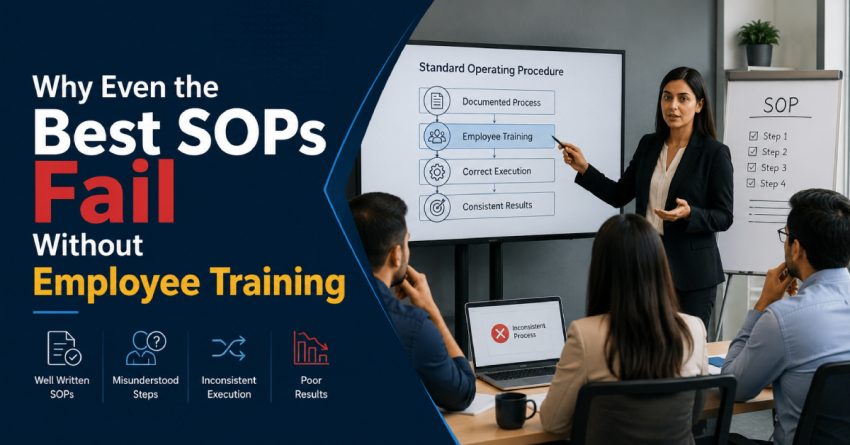
For an organization to be successful there must be some process or workflow that keeps them productive and maintains their quality standards. The standard operating procedures give the employees guidelines on how to do things correctly and effectively. But for all this to be possible, there must be proper training of the employees, since without it, all these guidelines will be useless.
Why SOP Training Matters
Standard Operating Procedures (SOP) are meant to bring about uniformity within the operations of an organization. Employees are made aware of their duties, and they become clear on how things should be done. Training is what enables them to implement the procedures correctly in practice.
Without proper training, employees may misinterpret SOPs and thus make mistakes and waste time doing so. With training, employees get to know the essence of the processes in place and why they have been adopted.
Improving Operational Consistency
The first advantage that comes from training employees is improved operational consistency. Employees are bound to carry out tasks in a consistent way if all of them have been trained according to the same guidelines.
Well-trained employees are expected to be consistent while executing certain processes. For instance, this consistency will be crucial for organizations operating in the fields of health care, manufacturing, finances, and customer services.
Another advantage of consistent training is that companies find it easier to manage their standards when it involves more than one department or location.
Reducing Errors and Workplace Risks
Most errors committed by individuals stem from ignorance of the correct procedures and lack of proper instructions on how to do things. Training is very important in minimizing errors since it ensures that employees know the right procedures that they should undertake.
For instance, if there is a problem with how employees use equipment, then it could cause serious accidents and expensive damages. With training, the employees get to know the appropriate operating procedures.
The presence of an effective Standard Operating Procedure Management system, coupled with proper employee training, could greatly minimize hazards at work.
Enhancing Employee Confidence and Productivity
When an individual knows what he/she needs to do, the efficiency levels go up. Training ensures that he/she has the necessary knowledge and skills required to accomplish his/her work effectively. This makes them more productive as they will not need to seek clarification or ask too many questions.
With confidence in their ability to do their work well, they will be more enthusiastic and committed to the job at hand. Training makes it easier for new recruits to acclimatize and become productive very fast.
Employees who have undergone training usually exhibit improved job satisfaction and retention.
Supporting Continuous Improvement
Due to constant innovation and changing consumer requirements, businesses’ processes change regularly. The process of employee training makes sure that personnel are aware of any changes in procedures.
The regular holding of training classes not only helps to maintain current procedures but also introduces new ways of working or even tools.
Furthermore, managers may take advantage of such training and receive feedback from employees regarding any aspects that should be improved.
Conclusion
Training is a very important aspect when implementing SOPs in an organization. With training, employees get to know how things are done, they can execute their work in the same manner every time, and this increases efficiency in operations and safety. Companies that value training are able to make fewer mistakes and stay productive.
Frequently Asked Questions
Also Read: How Standard Operating Procedures (SOPs) Improve Accuracy and Reduce Errors