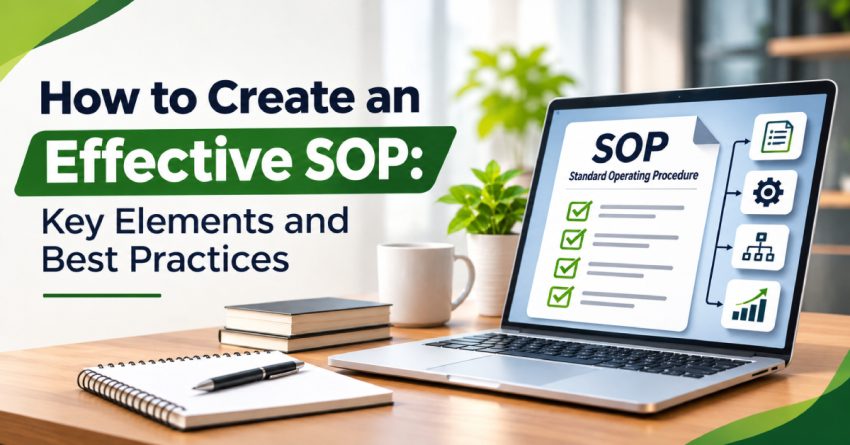
A Standard Operating Procedure (SOP) is a document that outlines the steps to be followed when performing a specific task or process. It gives all staff members clear directions as to how to do their job in an efficient and proper manner. SOPs are used by businesses to keep the quality of their product, minimize errors, train staff, and make sure that they adhere to their policies and industry standards.
To make an effective SOP, it is important to have the proper structure, correct information and regular updates. The following are some of the elements and best practices that can be used to help create useful procedures.
Identify the Purpose and Scope of the Procedure
Identify the purpose of the procedure. Identify the reason for the process or procedure, its use, and the end result expected from the process or procedure. The scope of the procedure needs to be established.
Clearly defined purpose – eliminates confusion and lets workers know when to use the procedure. It also guarantees that the document meets the right business needs.
Determine Responsible Individuals
All procedures must include who is responsible for doing, reviewing and approving the tasks. Specific job descriptions minimise duplication of effort and promote accountability.
Add the names of relevant departments, job titles, or specific duties. If more than one employee is involved, describe the process for assigning tasks and when responsibilities are given to other employees.
Give Clear, step-by-step Instructions
The bulk of a standard operating procedure should describe the process in the order in which the task(s) are to be completed. Avoid using jargon and lengthy sentences for ease of understanding.
Avoid unnecessary technical terms and define any specialised terminology that employees need to understand. Numbered steps, checklists and flowcharts can make instructions easier to follow.
Every step should include what to do, who to do it by and other conditions or expected results for the step.
Include Required Resources and Safety Measures
Identify materials, documents, equipment, tools and software necessary for the process to be completed. Staff should be able to spot the resources needed before they begin to work.
Include any precautions, protective equipment, or emergency instructions if there is a safety risk. This information assists employees to comply with safety requirements and decreases the risk of work accidents.
Establish Document Control
A good SOP should contain the key information of the document, including the title, number, version, date, author and approval. For employees to determine the correct version, these details are important.
Delegate the responsibility for review and updating the document. Revision may have to be made due to advances in technology, changes in regulations, equipment, or in business procedures. Keeping the version history will allow employees not to use outdated instructions.
Test and Review the Procedure
The procedure should be tested and reviewed by employees who are expected to perform the task before implementation. Employees can provide feedback on omissions in the procedure, on confusing instructions, and other concerns. The SOP should be approved by the relevant authority before implementation.
Best Practices for Writing Effective SOPs.
Keep SOPs concise, use consistent formatting and clear headings, and store approved versions in an easily accessible location. Train employees to follow the documented procedures.
Review SOPs periodically and whenever processes change. Track relevant performance indicators, such as error rates, completion times and compliance, to assess their effectiveness.
Conclusion
A well-designed SOP helps organisations establish consistent work practices, improve accountability and reduce operational errors. Clearly defined responsibilities, step-by-step instructions, proper document control and regular reviews help ensure that SOPs support reliable day-to-day operations.
FAQs
Q: What should the purpose of an SOP explain?
An SOP’s purpose explains why the procedure exists, when it should be used and the result employees are expected to achieve.
Q: What is document control in an SOP?
Document control records the SOP title, number, version, date, author, approval details and responsibility for future updates.
Q: Does an SOP require approval before use?
An SOP should be approved by the relevant authority before implementation and made easily accessible to employees.