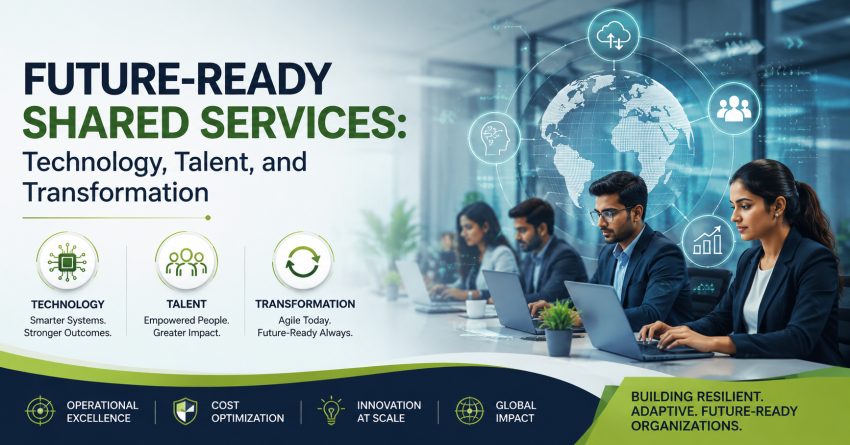
In light of increasing digitization in the business environment, shared services are evolving into strategic business partners rather than transactional support centers. Companies are not just trying to reduce costs to save on operational expenses but are making investments in technology, people and processes to add more value to their business. Innovation, agility and continuous improvement form the basis of a modern global shared services organization and help companies become agile to meet market changes and work efficiently.
The Changing Role of Shared Services
As companies grow and expand their operations across regions and business functions, shared services play a crucial role in achieving consistency, efficiency, and scalability. Today, shared services are supposed to provide valuable insight, improve the customer experience and be an enabler of enterprise-wide digital transformation in business.
This requires a comprehensive solution that includes advanced technology, competent workforce and innovative business practices.
Technology: The Foundation of Transformation
At present, technology is revolutionizing the way shared services work.
Intelligent Automation
RPA, AI and workflow management systems automate repetitive actions, increase the accuracy of processes and shorten the time frames. It allows companies to dedicate themselves to strategy implementation and reduce administrative tasks.
Cloud-Based Collaboration
Cloud technology allows teams across different locations to collaborate while providing shared access to data and applications. Cloud-based solutions provide greater transparency and process consistency in a global shared services company.
Data-Driven Decisions
Through real-time reporting and advanced analytics, organizations can monitor their performance and gain better visibility into potential risks and make well-informed decisions. The availability of proper information helps the leaders to continuously refine their operations and improve service delivery.
Talent: Empowerment of People
Technology may be used as a means of transformation, but at the same time, the right talent is required for this purpose.
Continuous Learning
In the context of increasingly complex digital solutions, organizations need to conduct continuous learning programs. Employees who are knowledgeable about automation, analytics, process improvement and digital collaboration are better able to help achieve business objectives.
Leadership and Innovation
The leaders who enable future-ready shared services are those who are able to foster innovation, lead cross-functional teams and to successfully lead digital transformation programs. A team with empowered employees will be more likely to come up with ideas for process improvement.
Transformation: Building Long-Term Agility
Transformation is not a single project, but an unending journey towards continuous improvement.
Agile Operating Models
An operation model that is flexible enables organizations to respond quickly to changes in regulations, customer requirements, and new business opportunities, without interrupting operations.
A Culture of Continuous Improvement
A successful global shared services organization is driven by innovation. Periodic process audits, implementation of new technology, and feedback from employees establish a culture of operational excellence.
Conclusion
For shared services to become successful and thrive, you must bring technology, talent and transformation together into an integrated operating model. Businesses that embrace intelligent automation, continuous employee development, and flexible business processes will be better positioned to thrive and remain resilient. A progressive and ambitious global shared services organization will continue to be a key contributor to innovation, process efficiency and enterprise success, as business landscapes evolve.
Frequently Asked Question
Q: What are future-ready shared services?
Future-ready shared services are centralized business functions that use advanced technology, skilled talent, and continuous process improvement to deliver efficient, scalable, and value-driven services across an organization.
Q: Why are shared services becoming strategic business partners?
Shared services now support business growth by improving operational efficiency, enabling digital transformation, providing business insights, and enhancing customer and employee experiences.
Q: What skills are essential for future-ready shared service professionals?
Key skills include digital literacy, data analytics, process improvement, automation management, cloud collaboration, problem-solving, leadership, and adaptability to new technologies.
Q: What are the long-term benefits of future-ready shared services?
Future-ready shared services improve operational efficiency, enhance scalability, strengthen business resilience, support digital transformation, reduce costs, and drive long-term business growth.
Q: What is an agile operating model in shared services?
An agile operating model allows shared service teams to quickly adapt to changing regulations, customer demands, and business priorities while maintaining operational efficiency.
Also Read: How Digital Workflows Improve Shared Services Efficiency