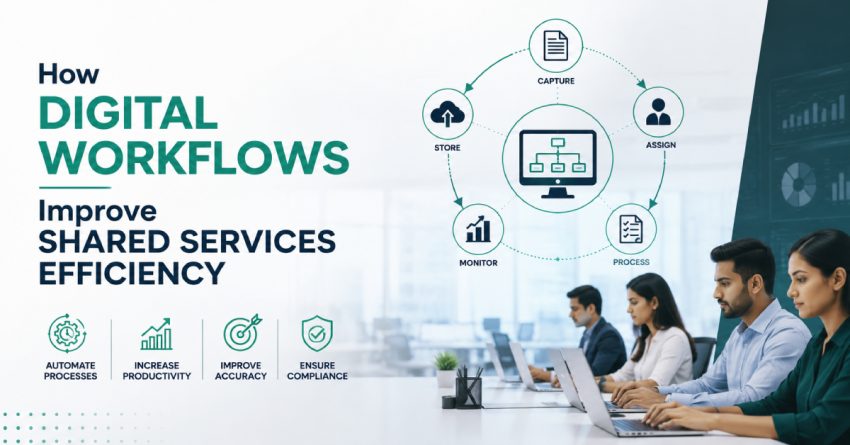
In the rapidly evolving business landscape of today, organizations are constantly striving to provide services faster, cut down on expenses and boost accuracy of their operations. The traditional manual methods can lead to bottlenecks in the decision-making process, which can result in errors. It is here that digital workflows are changing the way business function. Global shared services are becoming more agile, efficient and able to support enterprise-wide growth by automating repetitive tasks and bringing seamless collaboration between departments.
Why Digital Workflows Matter in Shared Services
A digital workflow takes out the paper and manual processes and installs technology-driven, automated processes. Tasks are not managed through emails, spreadsheets or multiple approvals, but rather follow a workflow that is predetermined and consistent.
This translates to more streamlined operations for global shared services in finance, HR, procurement, IT, and customer support. Teams can have access to live data, share information efficiently and handle requests quicker than you would by traditional means.
Key Ways Digital Workflows Improve Efficiency
Digital workflows foster an ecosystem of change, instead of just one improvement.
Faster Process Execution
Simple processes like invoice approvals, employee sign-ups, purchases, and compliance inspection can be automated. This decreases processing time, meanwhile enabling employees to dedicate themselves more to strategic tasks.
Better Visibility Across Operations
Digital dashboards provide real-time information on task status, pending approvals, and service performance. Managers can monitor operations better and make prompt decisions to resolve problems proactively.
Reduced Human Errors
Manual data entry can record errors which can cause delays and other unforeseen costs that were not anticipated in the first place. Automated workflows come as much relief since they ensure easier and faster productivity and quality of service while minimizing errors and inconsistencies.
Enhanced Collaboration
Digital workflows make teamwork much easier and more efficient, especially across different locations, enabling teams in different regions to collaborate through digital platforms. This can be particularly helpful if multiple business units are working in different countries and time zones, such as in the context of global shared services.
Business Benefits Beyond Automation
Digital workflows are more than just efficient. Organizations also gain:
- Improved compliance through standardized approval workflows
- Improved employee productivity as the repetitive tasks can be weeded out
- Improved customer and employee experience with quicker service delivery
- Ability to scale up operations to accommodate business expansion without the corresponding rise in operational costs
These benefits help businesses meet evolving business needs without compromising on the quality of service.
Building the Future of Shared Services
With businesses on the road to digital transformation, workflow automation is no longer just a matter of efficiency but a business necessity. To boost agility, governance and provide tangible business value, modern global shared services rely on intelligent digital workflows. Businesses that leverage these technologies today will be more likely to optimize operations, improve connections and create a more sustainable and future-proof shared services model.
Conclusion
Digital workflows are changing the face of enterprise operations with a more connected, transparent and efficient shared services experience. With the digital transformation of businesses ongoing, global shared services will become even more strategic in ensuring operational excellence, business agility and consistent value across the business organization. By adopting workflow automation now, organizations are better positioned to create robust and future-proof processes that prepare their businesses for tomorrow’s challenges.
Frequently Asked Question
Q: What is a digital workflow?
A digital workflow is an automated sequence of business tasks that uses digital tools and software to streamline processes, reduce manual work, and improve efficiency.
Q: How do digital workflows improve shared services efficiency?
Digital workflows automate repetitive tasks, reduce manual errors, improve collaboration, and provide real-time visibility into operations. This helps shared service teams complete processes faster while maintaining accuracy.
Q: Can digital workflows reduce operational costs?
Yes. By automating manual tasks, reducing paperwork, and minimizing human errors, digital workflows lower operational costs while improving overall productivity and service quality.
Q: Are digital workflows suitable for global shared service centers?
Yes. Digital workflows enable teams across multiple locations and time zones to collaborate efficiently, ensuring consistent processes and faster service delivery in global shared service centers.
Q: What technologies are commonly used in digital workflows?
Organizations commonly use workflow automation software, cloud platforms, artificial intelligence (AI), robotic process automation (RPA), business process management (BPM) tools, and analytics dashboards to build digital workflows.