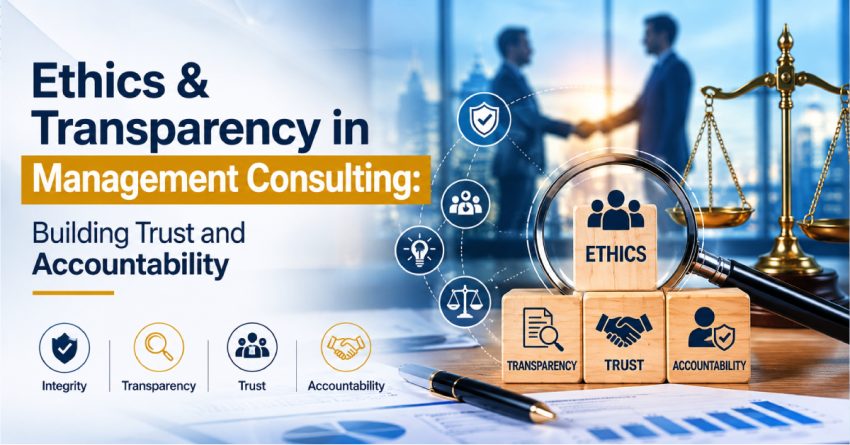
In today’s complex business landscape, ethical conduct and transparency have become essential pillars of professional success. This is especially true in Management Consulting, where firms are entrusted with sensitive information, strategic decision-making, and organizational transformation. Clients rely heavily on consultants not only for expertise but also for integrity and honesty in every engagement.
The Importance of Ethics in Consulting
Ethics in Management Consulting is more than just abiding by the law. It includes confidentiality, conflict of interest and independence. Consultants are privy to confidential data, financial information, and processes. Any abuse of this information can destroy client and consultant relationships.
Furthermore, ethical consultants put the client’s interests first, rather than their own. This means offering feasible advice, rather than overestimating outcomes to win business. Adhering to ethics promotes long-term client relationships and trust, essential in a credibility-based industry.
Transparency as a Trust Builder
Transparency is also crucial for Management Consulting firms. Clients want information about the nature of the project, the consulting methods to be used, the risks and the results. Transparency from consultants fosters an open environment for clients to base decisions on.
By being transparent, the consultant can foster a culture where the client is comfortable making decisions based on the available information. For example, when costs, schedules and risks are communicated at the very beginning, it makes it easy later. Being transparent means letting the client know the limitations the consultant faces both in terms of expertise as well as potential risks associated with the project.
Managing Conflicts of Interest
Another major ethical consideration in Management Consultancy is conflict of interest. Consultants may have multiple clients in the same industry, thus causing conflicts of interest. It is therefore necessary to be ethical in management consultancy by having policies against conflicts of interests and protection of client information.
It is important to disclose any conflict up front. This enables clients to understand the risks and decide whether to proceed with the engagement. Failure to address such concerns may result in reputational and legal risks.
Accountability and Professional Standards
Ethical consulting also requires adherence to the professional standards in the field of consultancy. Many consultants are bound to uphold certain codes and standards. These are ensured through periodic audits and client feedback process.
In addition to this, it is also important that consultants are accountable for their advice. If strategies fail to bring desired results, this should be acknowledged and solved together ethically.
Building a Culture of Integrity
Lastly, it is also vital for management consultancy firms to create a culture based on ethical considerations. Managers are able to create such cultures through emphasis on honesty, fairness and accountability. Ethical codes and trainings are also helpful in this regard.
By maintaining ethical standards, consulting firms are able to protect themselves as well as build their reputations among potential clients.
Conclusion
It is evident from that ethical considerations along with transparency are crucial for management consultants. Through maintaining these standards, consulting firms can establish themselves successfully among the clients.
Also Read: Why Internal Controls Are the Backbone of Corporate Finance Management