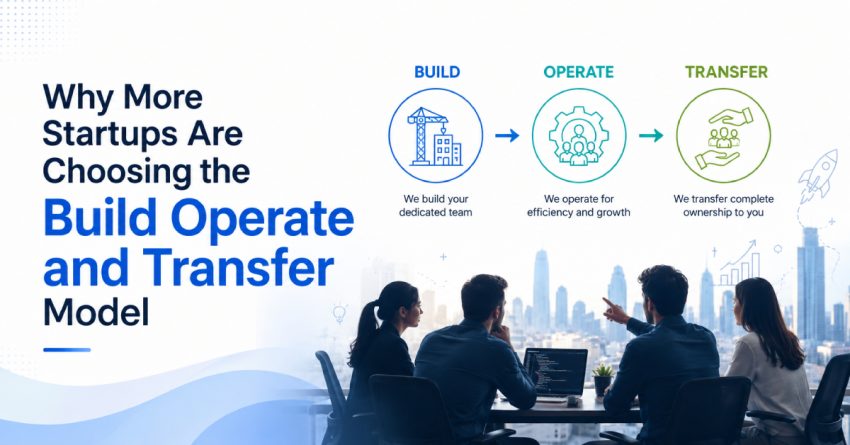
In today’s business scenario, where competition exists everywhere and companies are looking for means to expand their operations and at the same time minimize their risks and keep costs to a minimum, it becomes important for them to adopt a certain model. Entering new markets, acquiring skills, and having good operational infrastructure are some of the factors that can be very difficult for startups to achieve. This is why the Build Operate Transfer Model is now gaining popularity among businesses.
Under this model, the business can build its presence at a new place with the help from a knowledgeable partner who initially manages the process. When the operation becomes efficient, it is handed over to the business concerned.
Faster Market Entry
One of the major advantages that the startup companies find in using this method is the rapidity with which they can enter a new market environment. Establishing a whole new office and hiring people for it might take a very long time, even years, but with the support of an expert partner, this process can be considerably shortened.
This accelerated market entry enables businesses to capitalize on opportunities quickly and gain a competitive advantage in rapidly evolving industries.
Reduced Operational Risks
The growth process itself may be accompanied by several uncertainties, among which there may be a number of problems such as regulatory issues, staffing problems, and even cultural barriers. In the case of companies unfamiliar with doing business in foreign environments, these may pose a serious threat.
The use of the Build Operate and Transfer model provides startups with the advantage of utilizing the knowledge of their partner concerning local regulations, norms of conduct, and work force issues.
Access to Skilled Talent
Recruitment of experienced personnel is one of the challenges faced by expanding startups. Recruiting people who are new to an unknown area takes a lot of time and money. This business model ensures access to proven recruitment channels and knowledge about how to form highly productive teams.
Through collaboration with a partner firm specializing in recruiting talents, the startups get access to skilled labor much faster.
Cost-Effective Growth Strategy
Limited finances represent one of the typical issues that occur in start-ups. The establishment of infrastructure, creation of legal entities, and functioning of business without support from other sources may become rather costly.
By using a build-operate-and-transfer strategy, the costs associated with set-up and management activities can be effectively distributed throughout the process.
Focus on Core Competencies
Start-up businesses have often flourished due to their innovations in terms of their products, services, or even technologies. The problem is that managing the activities associated with their expansion may divert attention from these core strengths.
Through delegating the responsibility of setting up and running the newly formed business venture, they are able to concentrate on the things that made them successful.
Seamless Transition to Ownership
The major strength of this approach lies in the fact that it eventually offers full ownership and control. Upon maturity of the operation, it is the startup’s responsibility to take charge of its employees, resources, and processes.
Conclusion
In the quest to find efficient means of expanding globally and competing among other firms, the Build Operate and Transfer Model has proven to be an ideal approach. This is because it offers many advantages such as risk mitigation, fast market entry, accessing talented personnel, and cutting costs. Through a combination of expertise and ownership, this model will help startups to grow sustainably.
Frequently Asked Questions
Also Read: How Build Operate Transfer Outsourcing Supports Long-Term Strategic Planning