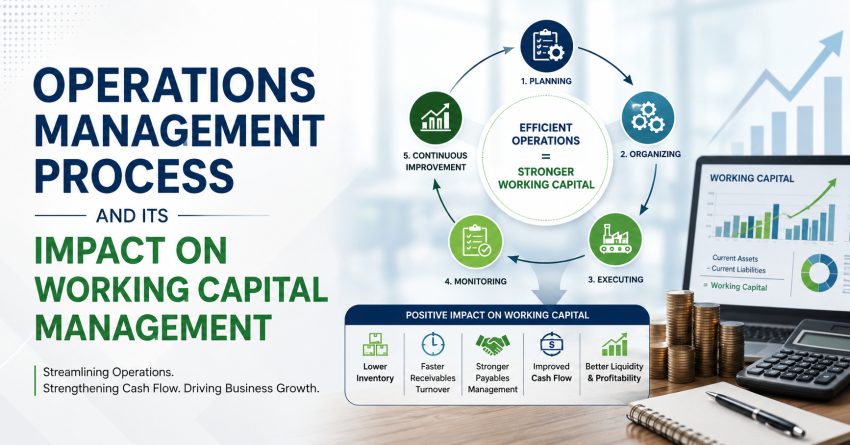
For businesses to be able to grow, smooth operations and good financial standing are two things that should be ensured. Besides sales and consumer demands, good internal processes are also required to ensure smooth finances for the business. The area in which operational efficiency affects business finances the most is that of working capital management.
Operational processes are very important as they are involved in the management of the company’s inventory, its production, vendor coordination, as well as use of resources. For all these things to work well and for the cash flow to be adequate, as well as for the company to have enough funds at its disposal for business activities.
Understanding Working Capital Management
Working capital is an element that relates to the amount of money required in managing the company’s business operations. It includes current assets and liabilities of the firm.
If a company does not practice good management of its working capital, then the company will suffer due to financial constraints, excessive borrowings, and low profits. Since operational processes affect inventories and production, operations management plays an essential part in working capital management.
Inventory Control and Cash Flow
Working capital becomes trapped in large amounts within inventory. This causes an increase in warehousing costs and working capital that could have been used for business expansion or development purposes.
The operations management process ensures that businesses retain optimal inventory amounts through proper inventory control and planning. This results in less stock and adequate products availability.
Efficient processes ensure that there is improved cash flow in the organization, and therefore wastages are reduced to a minimum. It makes organizations enjoy better liquidity.
Faster Production Cycles Improve Liquidity
Production delays result in poor utilization of the business’s working capital. This happens since it has become costly for the business during operations, and sales cannot take place due to delayed delivery of the products.
Efficient operations management ensures that products are manufactured fast enough, and sales are made soon after manufacturing. This results in better cash flow and better liquidity.
Vendor Management and Payment Planning
Vendor coordination is yet another significant factor associated with working capital management. Poor management of vendor relationships could lead to pressure to pay or even to problems with supply.
Operations management enables proper scheduling of procurement activity and negotiation of favorable payment terms with suppliers. This leads to cost saving and prevention of unnecessary ordering.
Efficient vendor management contributes to smooth cash flow and makes the business capable of handling short-term payments easily.
Reducing Operational Waste
Inefficiencies in operations, such as mistakes during the manufacturing processes, downtime or improper resource allocation, increase costs and reduce profitability. Inefficiency leads to wasteful spending of working capital.
Operations management process enables businesses to understand their inefficiencies. Better planning of workflow and employee coordination improve efficiency.
Improved efficiency makes it possible for businesses to save costs and allocate working capital in a much better way.
Better Demand Forecasting
Demand forecasting is an important tool that helps maintain balance between production and consumer demand. Poor forecasting could result either in producing too many goods or in having not enough goods on hand. This is harmful to working capital management.
Operations management facilitates proper forecasting by analyzing sales trends and operational capabilities. It is easy to predict consumer demand and create production.
Coordination Between Finance and Operations Teams
In many organizations, the finance department does not coordinate its activities with the operations team, thus causing problems of communication and inefficiency. As a result, there may be serious problems with budgeting, procurement, and cash flow management.
An effective operations management process will help to achieve a much more coordinated approach and will ensure that the operational and financial aspects of running the company are in sync.
It will facilitate efficient cost control, collections, and management of working capital needs.
Conclusion
The link between operational effectiveness and financial success is much closer than most companies understand. Proper operations management ensures proper management of inventory, efficiency of production processes, minimizing waste, and coordinating vendors.
Each of these domains has a direct impact on the working capital management and company’s performance. Companies that operate under well-coordinated operations and financial management witness better cash flow and are less likely to face financial difficulties.
Frequently Asked Questions
Q: What is working capital management and why does it matter for business operations?
A: Working capital management is the process of managing a company’s current assets and liabilities to ensure it has enough funds for day-to-day business activities. Without it, businesses face financial constraints, excessive borrowing, and reduced profitability — no matter how strong their sales are.
Q: What is the role of operations management in working capital?
A: Operations management directly impacts working capital by controlling inventory levels, managing production cycles, coordinating vendor relationships, and reducing operational waste. Efficient operations ensure that cash flows smoothly through the business without getting unnecessarily tied up.
Q: What are the key components of working capital management?
A: The key components include inventory management, accounts receivable, accounts payable, cash flow planning, demand forecasting, and vendor coordination. Together, these elements determine how effectively a business manages its short-term financial health.
Q: How can businesses improve working capital through better operations management?
A: By optimizing inventory levels, speeding up production cycles, reducing operational waste, forecasting demand accurately, and coordinating vendor payments strategically — businesses can significantly improve their working capital position without additional borrowing.
Q: What are the common operational factors that negatively affect working capital?
A: Common factors include excess inventory, slow production cycles, poor vendor payment planning, operational waste, inaccurate demand forecasting, and lack of coordination between finance and operations teams.
Also Read: The Importance of Cross-Functional Collaboration in Operations Management Process