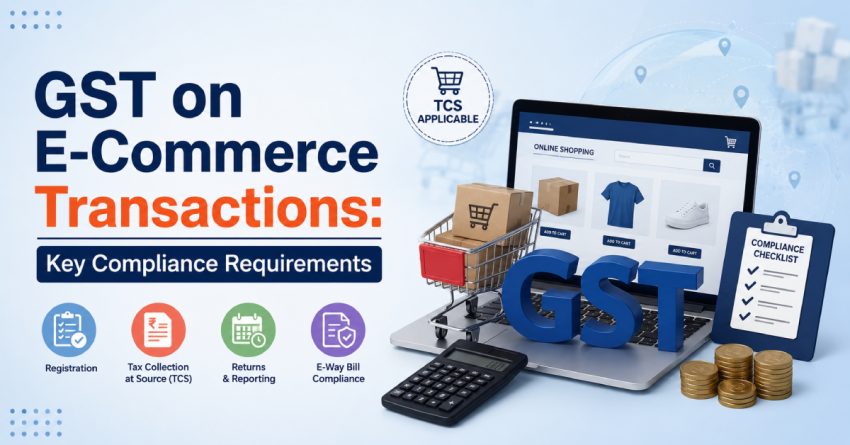
The surge of e-commerce has transformed the ways in which businesses are selling their products and services, but it has also added new tax compliance obligations. It is important for sellers, e-commerce operators, and some service providers to know how Goods and Services Tax (GST) is applicable to online transactions, collections made via marketplace and reporting requirements. The GST regime may engage multiple parties and various transactions, making the need for structured guidance to avoid errors likely. Organizations should have processes in place to comply with the relevant GST requirements.
Understanding GST in E-Commerce
Ecommerce transactions can be made between multiple parties, such as the seller and the buyer, the marketplace and the logistics company, and the marketplace and payment intermediary. The treatment of the transaction is subject to GST depending on the nature of the transaction and on who is involved.
It’s especially critical for businesses that sell their products on online marketplaces to understand the registration, invoicing, tax collection and reporting requirements. Compliance process may vary depending on the business if it is a goods business or a service business or even a platform business.
GST Registration Requirements
One significant step for businesses selling via e-commerce is getting registered for Goods and Services Tax. Sellers providing e-commerce supplies may be required to register even if their turnover would not otherwise exceed the general threshold, due to the provisions that apply.
Registration requirements for businesses should be evaluated considering type of supplies, geographical location of the business, exemptions, and contribution to the e-commerce ecosystem.
Businesses should determine the appropriate registration structure and maintain accurate GST records based on the applicable GST requirements
Tax Collection at Source by E-Commerce Operators
Tax Collection at Source (TCS) is one of the unique aspects of ecommerce GST compliance. The taxable supplies through e-commerce operators are generally subject to TCS.
The total amount should be paid to the government and reported accordingly. The seller is required to compare the amount of tax deducted by the platform with his/her own GST records, so that the tax deducted in his/her electronic cash ledger and return is correct.
Invoicing and Record Maintenance
For GST compliance, correct invoicing is very important. The sellers have to provide tax invoices containing all information like GSTIN (wherever applicable), invoice number, invoice date, taxable value, tax percentage and amount of tax charged.
It is equally important for the organizations to maintain proper record for:
- The purchase and sale of goods and services.
- Tax invoices and Credit notes
- Returns and cancellations
- The TCS collected by the marketplaces.
- Lack of filing of GST returns and payments
- Documents for input tax credit
Organized records will greatly facilitate reconciling and preparing for return.
Input Tax Credit Considerations
Businesses can avail input tax credit on purchases made for business activities, provided the goods/services are eligible for input tax credit and other applicable conditions of GST are fulfilled. For e-commerce businesses, it is important to have purchase invoices correctly recorded and to only claim credit where applicable conditions are met.
Regular reconciliation of the purchase details with the GST information may facilitate spotting any discrepancies.
Managing Returns, Refund, and Cancellation
Product returns, cancellations, refund issues, and replacement transactions are some of the common activities carried out by online enterprises. These operations may influence the taxable amount, output tax, and the accounting entries.
It is important for organizations to establish effective procedures for processing credit notes. The use of automated systems would be helpful in handling huge amounts of transactions.
Reconciliation is Critical
Transaction data for ecommerce businesses can come from different channels such as marketplaces, accounting software, payment gateways, and logistics companies. These may cause reporting problems when there are discrepancies between the two records.
Discontinuing any reconciliation will identify discrepancies in sales value, GST amount, TCS, refund and credit note. Businesses should establish reconciliation controls to ensure that operational data matches statutory GST reporting.
Conclusion
The compliance in e-commerce with this GST regime involves complex coordination of the transactional workflow, invoicing, TCS, input tax credit, reconciliation and return filing. With the increase in the number of online transactions, it is important for businesses to have efficient systems and processes for handling these requirements.
Businesses should understand their GST responsibilities and maintain appropriate internal procedures to reduce the risk of errors. By managing the GST, businesses will not only be able to comply with the regulations but also gain more visibility in their financial statements.
Frequently Asked Questions
Q: What is TCS in e-commerce GST compliance?
TCS requires e-commerce operators to collect tax on the net value of taxable supplies made through their platforms and deposit it with the government. Sellers should reconcile the TCS credited to their electronic cash ledger with their GST records.
Q: Are e-commerce sellers required to register for GST?
GST registration requirements depend on the type of supply, turnover, location, and applicable exemptions. Businesses should check the requirements applicable to their specific activities.
Q: What invoice details are required for e-commerce transactions?
GST invoices should generally include the supplier’s GSTIN, invoice number and date, taxable value, applicable GST rate, and tax amount.
Q: Why is reconciliation important for e-commerce businesses?
Reconciliation helps ensure that sales, GST, TCS, refunds, and credit notes recorded across different systems match the statutory GST records.
Q: What is the difference between an e-commerce operator and a marketplace seller?
An e-commerce operator manages the platform that facilitates online sales, while a marketplace seller uses the platform to sell goods or services. Their GST responsibilities differ accordingly.
Also Read: GSTR-1 and GSTR-3B Reconciliation: Why It Matters