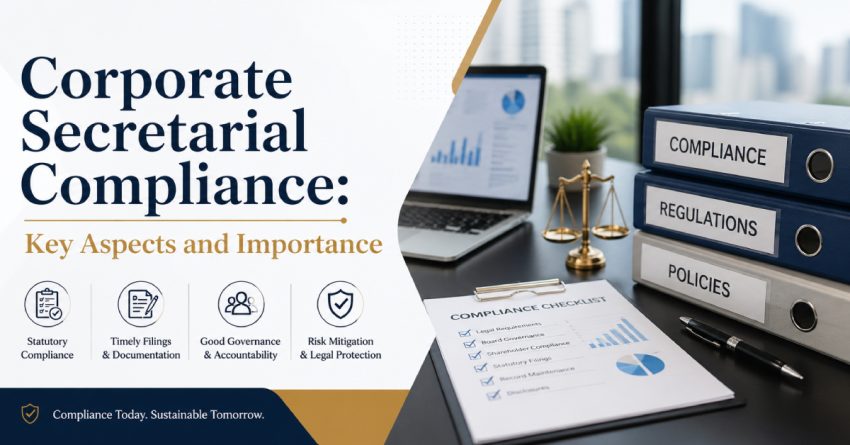
In today’s dynamic regulatory environment, businesses must adhere to a wide range of legal and procedural requirements to operate smoothly. One of the most critical yet often overlooked aspects is corporate secretarial compliance. It forms the backbone of a company’s governance structure, ensuring that all statutory obligations are met efficiently and on time.
What is Corporate Secretarial Compliance?
Corporate secretarial compliance can be defined as a collection of legal, administrative and regulatory obligations that a company has to satisfy to make it compliant with the relevant laws. Such duties are normally handled by an office secretary or a compliance specialist who sees to it that the organization does not violate any regulations established by the relevant authorities.
This involves keeping statutory registers, submitting annual returns, arranging board meetings, taking of minutes and timely disclosures. Adherence is not only a legal requirement but also an indicator of transparency and credibility of a company.
Why is Corporate Secretarial Compliance Important?
Corporate secretarial compliance is crucial to keep because of a number of reasons. Firstly, it enables companies to evade legal fines, fines and reputation. Compliance standards are strict and are enforced by regulatory bodies, a shift in which may have devastating effects.
Secondly, it enhances corporate governance by promoting accountability and ethical business practices. Compliant-driven companies tend to have a better reputation among investors, stakeholders and financial institutions.
Lastly, it also facilitates the smooth running of business. The fact that all the statutory requirements have been achieved in time allows companies to concentrate on development and strategic planning without the threat of legal disruption.
Key Components of Corporate Secretarial Compliance
A robust corporate secretarial compliance framework includes several important elements:
- Board and General Meetings: Conducting meetings as per legal requirements and maintaining proper documentation.
- Statutory Filings: Timely submission of documents such as annual returns and financial statements.
- Record Maintenance: Keeping statutory registers and company records updated.
- Regulatory Updates: Staying informed about changes in laws and regulations to ensure continued compliance.
These components collectively ensure that the company operates within the legal framework.
Challenges Businesses Face
Although it is a significant matter, corporate secretarial compliance is a challenge that most organizations face because it has complicated laws and regulations, which are constantly being changed. SMEs, especially, might not have the knowledge or capabilities to handle compliance.
Moreover, manual procedures may result in errors, failures to meet deadlines and inefficiency. This is why digital tools are becoming popular with many companies and compliance functions are now outsourced to professionals.
Best Practices for Effective Compliance
Businesses need to be proactive to deal with compliance. Establishing a compliance calendar, using technology, and enlisting the services of professionals can go a long way in mitigating risks. Frequent audits and internal controls also assist in detecting any loopholes and ensuring that all the requirements are met consistently.
Conclusion
To conclude, corporate secretarial compliance is an essential role which underpins the legal and operational integrity of a business. Knowing its significance and applying best practices, companies can avoid penalties, as well as develop a solid base for sustainable growth. Compliance is a sure-footed way to secure successful future for any organization.
This content is meant for information only and should not be considered as an advice or legal opinion, or otherwise. AKGVG & Associates does not intend to advertise its services through this.