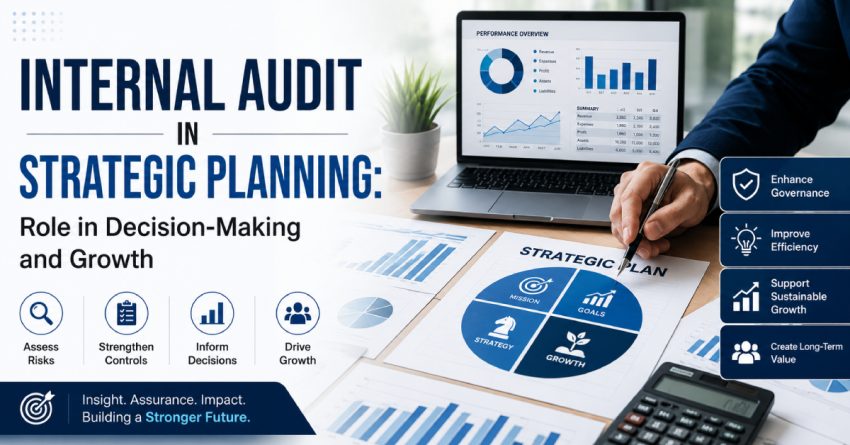
Businesses in the current competitive world require more than merely financial data to make decisions. They need to have a clear understanding of operations, risks and performance. It is in this regard that internal audit comes in very handy. In addition to compliance and detection of errors, internal audit also offers valuable insights that may inform a strategic plan and long-term growth.
What is the Role of Internal Audit?
The main role of internal audit is to assess the internal controls, risks, and the effectiveness of the processes. Its role has, however, changed over time. Internal audit nowadays cannot be confined to past performance, but it is also used to prepare organizations for the future.
Internal audit provides a better insight into the operations of a business by examining its processes and the gaps. These insights will be able to enhance efficiency and aid strategic decision making.
Converting Audit Findings into Action
Audit reports are usually rich in observations on inefficiencies, risk and control weaknesses. These findings can be taken as a starting point on strategic planning by the businesses instead of being treated as ordinary reports.
Internal audit assists in identifying areas that are not utilizing their resources or ways in which the processes can be enhanced. With these kinds of issues solved, companies are able to optimize operations and allocate resources better. This renders internal audits a significant instrument towards actionable decision-making.
Strengthening Risk Management
There is always risk in strategic planning. It could be entering a new market or the introduction of a new product; in any case, it is crucial to be aware of the risks. Internal audits is an important role in the identification and evaluation of these risks.
It points out weaknesses in systems, financial processes, and operations. Internal audit also assists business in formulating strategies that will reduce risk and offer a smoother process. Such a proactive strategy enhances the quality of strategic planning.
Enhancing Operational Efficiency
One of the determinants of business growth is efficiency. Internal audit offers the organization insight on the operations it performs and assists the organization to detect delays, redundancy and inefficiencies.
These areas can be improved to enable the businesses to cut costs and enhance productivity. These enhancements are strategic in nature. Internal audit knowledge is used to make sure that the strategies are realistic and in line with operational capabilities.
Supporting Data-Driven Decisions
In the contemporary business world, data is used to make decisions. Internal audit contributes value by ensuring the accuracy and reliability of this information. It makes sure that the information employed in planning is credible.
Organizations can develop realistic and effective strategies with the help of reliable data. Internal audit assists in avoiding guess and aids the decision-making process with facts and analysis. This enhances comprehensive planning.
Embracing Strategy and Compliance
Any business has to be within legal and regulatory frameworks. These requirements have to be considered on strategic plans to prevent any complications. The internal audit is used to ensure that compliance is upheld as it plans to grow.
It points out the places where regulatory risks can occur and proposes remedies. Combining internal audit insights will help businesses to come up with both ambitious and compliant strategies.
Driving Continuous Improvement
Strategic planning is not a one-time activity. It needs to be periodically examined and revised. This is aided by internal audit, which gives a continuous feedback on performance and processes.
It assists organizations to monitor the progress and find some new ways to improve. This is an ongoing cycle whereby strategies are kept up to date and relevant. Regular internal audits will enable businesses to adjust to the changing conditions with ease.
Conclusion
To plan a strategy, one must understand the strengths, weaknesses and risks of a business. Internal audit is the source of insights that can be used to develop successful and effective strategies.
Internal audits are an important factor in business direction because it helps to improve efficiency and risks management, as well as to guarantee compliance and assist in making decisions based on data. Through effective utilization of internal audit knowledge, organizations can plan sustainably and develop.
Also Read: Internal Audit: More Than Just Compliance