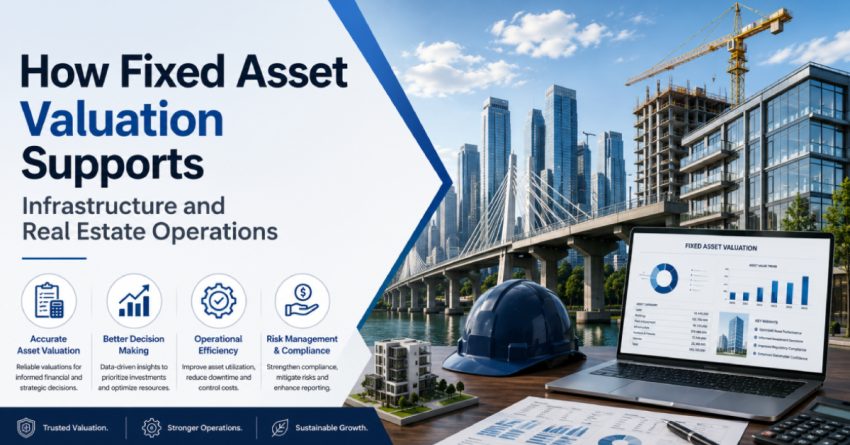
One of the most asset intensive industries in the economy is the one of infrastructure and real estate. These industries depend on tangible assets as a requirement for success in the long run. Whether commercial towers, housing complexes, industrial estates, highways or warehouses, these are some of the tangible assets that they use to operate and make profits.
It is now more important than ever before because of the growth of the industries to handle their assets properly and appraise them accordingly. Fixed asset valuation becomes an important step in this whole process to get to know the value of their tangible assets.
Understanding Fixed Asset Valuation
Fixed assets are tangible assets that a business uses in the long term to carry out operations and generate profit. Examples include land, buildings, construction equipment, office facilities, roads, machines, warehousing facilities and utility facilities in infrastructure and real estate businesses.
Fixed asset valuation is the evaluation of the value of tangible assets in the current state.
Importance in Infrastructure and Real Estate
Infrastructure and real estate projects tend to be big and take a long time to plan and execute. Under these conditions, it is crucial to have an appropriate fixed asset valuation for several reasons.
Better Financial Reporting
A proper asset valuation helps firms in creating accurate financial statements. Investors, creditors, and other stakeholders need information that shows the financial strength of an organization to invest in. It is possible that the assets are misstated and might lead to complications.
Improved Investment Decisions
In future development, there will always be a reliance on the current performance of the assets held. Valuation of fixed assets enables the firm to know its profitable, poorly performing, and potentially developing assets.
Easier Loan and Funding Approval
When a financial institution considers lending or funding to a company, it may evaluate and value company assets. A fixed asset valuation performed by a professional can offer assurance to a lender and enable a business to obtain financing that is more efficient.
Compliance and Tax Benefits
The accounting standards and regulatory requirements must be adhered to by the companies in the infrastructure and real estate sectors. Good, fixed asset valuation ensures that the company remains in compliance, and supports tax planning, depreciation and audit procedure.
Challenges in Asset Valuation
Price of assets related to infrastructure and real estate is not necessarily clear-cut. Regulatory, property demand, maintenance, and market swings can have a profound impact on asset value.
Commercial property in a rapidly developing area may appreciate it rapidly, for instance, while older infrastructure assets may lose value as a result of wear and obsolete technology. That is the reason why it is important to have regular fixed asset valuation to ensure that the figures remain accurate in the long run.
Role of Professional Valuation Services
Industry standard methods and comprehensive asset evaluations are employed by professional valuators to value assets. Their specialization can assist businesses in avoiding overvaluation or undervaluation, which can influence business decisions and financial stability.
They also have the knowledge of the sector specific needs on infrastructure and real estate, which guarantees the process of fixed asset valuation is in line with legal, operational and market norms.
Conclusion
In the fields of infrastructure and real estate, assets are the backbone of business and growth. Correctly valuing fixed assets provides greater clarity and transparency to financial systems and enhances investment decision making, regulatory compliance and strategic planning.
With the constant change and development of these sectors, businesses that focus on regular and professional fixed asset valuations will be better equipped to manage risk, attract investors and ensure sustainable growth in a competitive market.
Frequently Asked Questions
Q: What is fixed asset valuation and why is it important for infrastructure and real estate businesses?
A: Fixed asset valuation is the process of determining the current value of tangible long-term assets such as land, buildings, machinery, roads, and warehouses. For infrastructure and real estate businesses — which are heavily asset-dependent — accurate valuation is essential for financial reporting, investment decisions, and regulatory compliance.
Q: What types of assets are covered under fixed asset valuation in infrastructure and real estate?
A: Fixed assets in these sectors include commercial towers, housing complexes, industrial estates, highways, warehouses, construction equipment, office facilities, utility infrastructure, and other tangible assets used for long-term operations and profit generation.
Q: How does fixed asset valuation improve financial reporting?
A: Accurate asset valuation ensures that financial statements correctly reflect the organization’s financial strength. Misstated asset values can mislead investors, creditors, and stakeholders — making professional valuation critical for maintaining financial credibility.
Q: How does fixed asset valuation support better investment decisions?
A: By identifying which assets are profitable, underperforming, or have development potential, fixed asset valuation helps businesses make informed decisions about future investments, expansions, or disposals.
Q: How does fixed asset valuation help businesses secure loans and funding?
A: Financial institutions assess company assets before approving loans or funding. A professionally conducted fixed asset valuation provides lenders with the assurance they need, making it easier for infrastructure and real estate businesses to access financing efficiently.
Also Read: Fixed Asset Register: Legal Requirements under the Companies Act