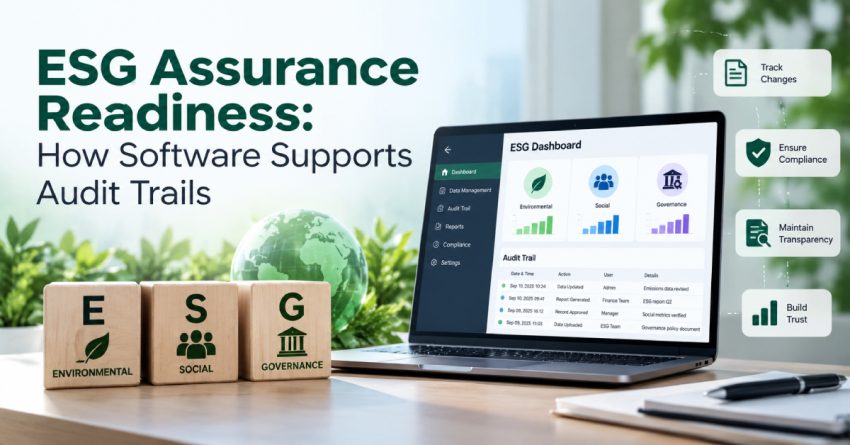
Environmental, social and governance (ESG) reporting is gaining traction, and organizations are becoming increasingly aware of the need for accurate, consistent and traceable information as part of their sustainability reporting. ESG data may be collected by different departments, locations, systems and from various external sources, and it may be hard to identify how reported figures are generated. ESG software can support organizations in establishing audit trails, data governance processes and documentation for assurance engagements.
The importance of ESG Audit Trails
An audit trail gives an authorized record of the information gathering and changing, as well as reviewing and reporting process. This is especially relevant for ESG reporting, as data can come from systems other than financial reporting.
Emission data might be provided on energy bills or on facility systems, for instance, and employee-related data might be kept by human resources. If not documented, it can be challenging to determine the source and the accuracy of reported statistics.
An audit trail provides a line of sight for the reviewers to see how the information that has been reported can be traced back to the underlying evidence.
Issues in ESG Data Management
There are several challenges that may impact ESG assurance readiness.
Multiple Data Sources
Sustainability data can be gathered using spreadsheets, ERP systems, HR platforms, utility records, supplier data and specialized monitoring systems. Managing these sources manually can increase the risk of inconsistencies.
Changing Data
This information is subject to change as errors are corrected and as new information is added. If there’s no version control, it can be difficult for an organization to identify which numbers were incorporated into the final report.
Lack of Documentation
The more useful a reported ESG is the more details the organization can provide regarding its source, calculation, owner and approval process. Without documentation, there is extra work involved in assurance procedures.
How ESG Software Can Support Audit Trails
An organized ESG software implementation can consolidate data and offer more transparency on data life cycle.
Data Source Tracking
Software can link ESG metrics with their sources and their inclusion in reporting so that organizations can know where information has originated and how it has been fed into reporting.
Version Control
Having the history of your data enables your organization to track the changes made to data and when they occurred. This is especially helpful if reported numbers have been adjusted, following an internal review.
User Activity Records
Role-based access and activity logs can be used to track who entered, reviewed, approved or changed certain information. This can improve accountability in the reporting process.
Evidence Management
ESG platforms can enable the linking of supporting documents with relevant metrics. Information and evidence such as certificates, calculation files, policies, and invoices can then be collated with the information they are supporting.
Improving Data Validation
Software can also be used to add automated validation checks looking for missing data, unusual data, or duplicate entries, or inconsistencies from one reporting period to the next.
These controls can be used to detect issues at an early stage for organizations before information reaches the final reporting point.
While automation does not replace the need for human review, it does minimise repetitive checks and enable teams to concentrate on the higher-risk areas.
Building up of Roles and Approvals
An ESG reporting system should clearly define responsibilities for gathering, reviewing and approving information.
These responsibilities can be supported by implementing an ESG software that includes workflows. Information can flow through pre-established review and approval processes, and a documented trail of how data was collected to how it was reported.
This can enhance accountability and decrease the chances for unapproved changes.
Preparing for Assurance
Assurance providers may need to be familiar with the processes and controls in the production of ESG information. Clear documentation and traceable data typically allows organizations to be better equipped to respond to evidence requests.
Businesses should examine their data sources, calculations, controls, supporting evidence, approval processes and exceptional items prior to an assurance engagement.
Software can help to make this preparation more systematic and store all relevant information in a controlled environment.
Going beyond compliance: building better ESG Governance
Audit trails are not just necessary for outsider assurance. Moreover, they may improve internal governance by providing confidence to management based on the data they use for decision-making.
Data accuracy helps an organization understand trends within their performance, evaluate the success of their sustainability initiatives and engage stakeholders in reporting progress.
Conclusion
A key element of ESG assurance readiness is having the capability to trace and explain the origins of information and the processes it went through. This can be challenging, especially as reporting needs and staff data volume grow, when using manual spreadsheets and disjointed systems.
A well-designed ESG software implementation will back up audit trails by tracking the sources of data, managing versions, documenting evidence, conducting validation checks, maintaining user activity logs, and enabling organized approval procedures. The concept of building traceability at the outset of ESG reporting can enhance data quality, streamline the process of preparing reports and create a more solid basis for meaningful and trustworthy sustainability reporting.
Frequently Asked Questions
Q: What is an ESG audit trail and why is it important?
An ESG audit trail is a documented record showing how ESG data is collected, modified, reviewed and reported. It helps organizations trace reported information to its underlying sources and supporting evidence.
Q: How does specialized ESG software support data governance and audit trails?
ESG software can support source and evidence linking, version control, user activity records and automated validation checks. These features can help organizations document changes, identify data issues and maintain supporting evidence.
Q: What are the primary challenges organizations face in ESG data management?
Common challenges include fragmented data sources, inadequate version control, inconsistent data and incomplete documentation of calculations, ownership and approvals.
Q: How does ESG software prepare an organization for external assurance audits?
It can help organize ESG data, supporting evidence, calculation records and approval workflows in a controlled environment, making information easier to retrieve during an assurance engagement.