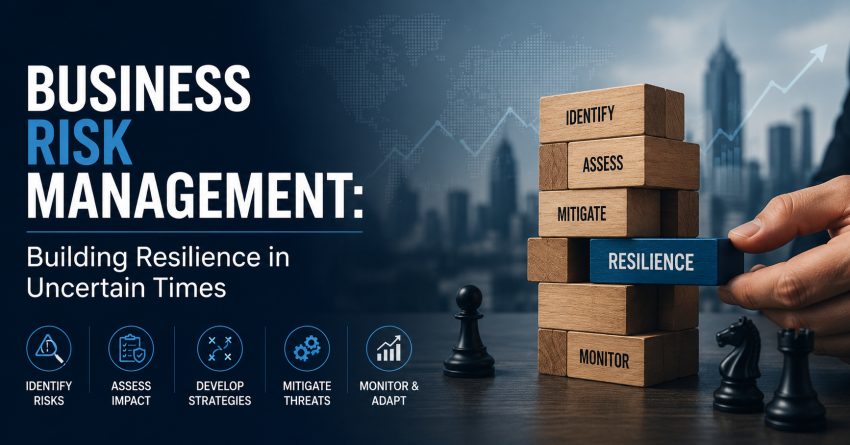
In the ever-changing business environment, there exist many uncertainties in a company which may affect its operations and future performance. Every business organization faces many problems including economic uncertainty, cyber threats, supply chain disruptions, regulatory changes, operation failures, and many others. Hence, risk management for businesses must be adopted by every business in order to cope with uncertainties.
During crises, business organizations would be able to move quickly in order to recover from the negative impacts caused by such risks. Through the implementation of risk management, business organizations would have the ability to overcome any crisis.
Identifying Potential Business Risks
The first step of effective risk management for businesses is to identify different risks that can be affecting their operation. These risks can manifest themselves financially, operationally, technologically, legally, or in terms of their reputation.
For instance, manufacturing firms can experience disruptions in the supply chain, and tech-based businesses may experience cyber security risks. Likewise, alterations in tax legislation or government regulations may impact business operations.
Regular risk assessments can help to detect vulnerabilities at an early stage and develop preventative action plans before issues become bigger problems and crises.
Building a Strong Crisis Preparedness Plan
Businesses can respond effectively during an unforeseen situation with a crisis preparedness strategy. With proper planning, the organizations can go on with the important operations without bothering much of the disturbances.
Part of the risk management plan for businesses is to have clear procedures in place for emergencies, set up responsibilities amongst management teams and have communication plans. Staff needs to be trained on regular basis to ensure they know what to do in an emergency.
Financial Planning & Business Continuity
One of the most significant factors in risk management for any company is financial stability. At the time of crisis, organizations have their bits of challenges like reduced income, delayed payments, or inflating expenses.
Therefore, it is highly advised to have a backup plan for risk management that manages finances efficiently and can also ensure to diversify sources of income. Insurance, as well as having some savings, should be checked and updated by organizations in preparation for unforeseen events.
In business continuity planning, it is important to ensure that critical activities such as data management, the supply chain, and customer service continue in case of an emergency.
The Role of Technology in Risk Management
Technological advances play an important role as a valuable resource that will assist in identifying any risks that the business faces. Risks can be discovered and managed promptly by utilizing the capabilities provided by the software, analytics, and monitoring technologies.
Cybersecurity is among the most relevant issues nowadays, and businesses operating digitally face significant cyber risks. Data protection and audits, along with staff education on cybersecurity, are essential steps in order to address such risks.
Strengthening Leadership and Communication
Leadership becomes one of the important aspects in the case of crises. Managers must act in time and communicate with their stakeholders including employees, customers, and shareholders in a relevant way.
Communication is a key step in the process of risk management which allows reducing possible misunderstandings. Communication is necessary not only during crisis periods but also afterward in order to create trust.
Reviewing the current strategies according to changes in the markets and emerging new risks is another task for leadership.
Long-Term Benefits of Risk Management
More benefits for business can be gained from risk management strategies compared to the ones designed for crisis management. The effectiveness of decision-making and company efficiency will increase along with the investment in risk management.
Conclusion
Uncertainty in the modern business world is an undeniable fact, and being prepared has become very important. There is nothing that can prepare businesses for any sort of threat; however, effective risk management for business ensures that organizations are able to identify any threats to their financial stability and take action accordingly.
Proper preparation, including proper use of financial tools, adoption of technological advancement, and effective leadership, can help ensure resilience and stability for businesses. If an organization is properly prepared, it can not only be better equipped for risk management but can also emerge successfully.
Frequently Asked Questions
Q: What is risk management for businesses and why is it essential?
A: Risk management for businesses is the process of identifying, assessing, and preparing for potential threats — financial, operational, technological, legal, or reputational — that could disrupt business operations. It is essential because it helps organizations respond effectively to crises and maintain stability in an uncertain business environment.
Q: What are the most common business risks that organizations face today?
A: Common business risks include economic uncertainty, cyber threats, supply chain disruptions, regulatory changes, operational failures, reputational damage, and sudden shifts in market conditions. Each of these can significantly impact a company’s performance and financial stability.
Q: Why is early risk identification important for businesses?
A: Identifying risks early through regular risk assessments helps businesses detect vulnerabilities before they escalate into major crises. Early detection allows organizations to develop preventive action plans that minimize financial and operational damage.
Q: How does financial diversification reduce business risk?
A: By spreading income across multiple revenue streams, markets, or products, businesses reduce their dependence on a single source of income. This makes them more resilient during economic downturns or sector-specific disruptions.
Q: How can technology help businesses manage cyber risks effectively?
A: Businesses can use cybersecurity software, real-time monitoring tools, data encryption, regular security audits, and employee training programs to detect and respond to cyber threats before they cause significant damage.
Also Read: Importance of Enterprise and Risk Management in Today’s Business Environment