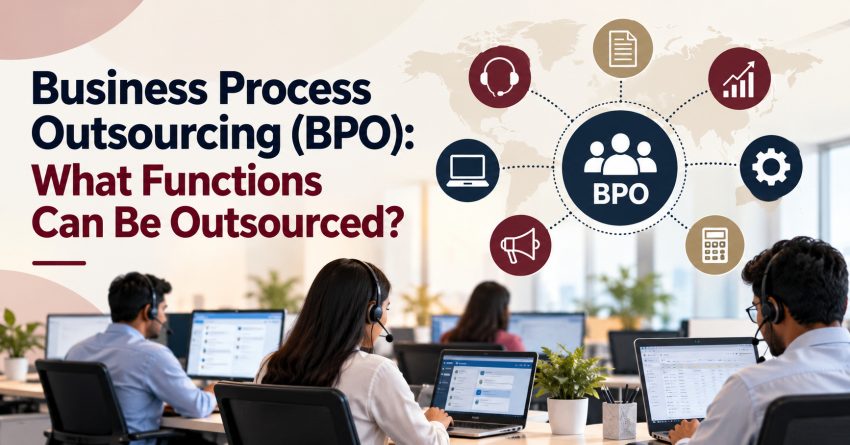
There are a number of things that a business needs to address. These include such things as responding to queries from clients, maintaining financial records, and taking care of the company’s employees. The more the company expands its operations, the more time it will take to complete these tasks. One of the approaches that businesses adopt to overcome this issue is through business process outsourcing services, where companies outsource certain business processes to third parties so that the internal team focuses on key processes.
What Is Business Process Outsourcing?
Business process outsourcing, or BPO, is delegating certain operational duties or business processes to a third party. Businesses can choose to outsource any or all of their processes. The structure may be beneficial to increase efficiency, access specific skills and knowledge and reduce operating expenses without having to develop each of these skills in-house.
The extent of business process outsourcing services depends upon the size of the organization, industry and operational requirements of the organization. Here are some of the most typical functions that businesses can outsource.
1. Customer Support and Call Centre Operations
The most common business process that companies outsource is the customer service process. Calls, emails, chats, complaints, and queries regarding products can be handled by the external team of people. It allows companies to respond to different kinds of interactions with customers at any time of day.
Also, outsourcing can help the company grow its customer service operation without employing a significant number of in-office staff.
2. Finance and Accounting
Financial administration entails repetitive work that needs to be precise and consistent. Bookkeeping, invoice processing, accounts payable, accounts receivable, payroll processing and financial data entry are some of the areas where businesses can outsource their bookkeeping tasks.
The activities involve specific procedures and data protection needs. When done right, outsourcing will help unload the administrative workload from the internal finance department and allow them to focus on financial analysis and planning.
3. Human Resource Management
Recruitment coordination, onboarding of employees, payroll processing, and benefits administration may be a considerable administrative challenge. Outsourcing of selected HR tasks will help businesses improve their workflow and process them better.
Other third parties can take care of keeping records for employees and scheduling appointments as well as answering the most frequent HR-related questions. Yet, sometimes, employee-sensitive issues and staff strategy may require management’s involvement.
4. IT Support and Technical Services
Technology is more and more vital to the continuous operations of businesses. Depending on the contract terms, outsourced IT services can encompass helpdesk support, software maintenance, network monitoring, problem solving and routine system administration.
As part of an agreement, providers can also back up and monitor cybersecurity risks and systems. Before transferring these responsibilities, companies should have clearly defined access control, SLAs, and data security needs.
5. Data Entry and Administrative Tasks
Other processes that are good for outsourcing include data entry, document processing, appointment setting, report preparation and record keeping. These tasks are typically repeatable, and can be controlled by regular processes.
When jobs can be delegated to someone else, they can focus more time on tasks that need business-specific knowledge and expertise, decision making, and face-to-face interaction with customers.
How to Choose the Right Functions to Outsource
Before engaging a provider, businesses should evaluate the cost, complexity, confidentiality and strategic importance of each function. Repetitive, time-consuming tasks with clearly defined procedures can be a good starting point.
Businesses should also assess the provider’s experience, technology, service standards and data security measures. Clear performance indicators and regular reviews help ensure that outsourced work meets agreed expectations.
Business process outsourcing should complement existing in-house capabilities without exposing the business to unnecessary risks. Clear responsibilities, appropriate controls and procedures for handling errors or service disruptions are essential.
Conclusion
Business process outsourcing can be used to aid many processes such as customer service, finance, human resource management, IT support, administrative operations and more. The right approach depends on a company’s goals, resources and operational priorities. Choosing appropriate business process outsourcing services and providing good control, enables organisations to optimise their processes, manage workloads and focus more resources on sustainable business growth. Quality business process outsourcing services can thus be an effective and viable component of future operations.
This content is meant for information only and should not be considered as an advice or legal opinion, or otherwise. AKGVG & Associates does not intend to advertise its services through this.
FAQs
Q: What are the main benefits of BPO?
BPO can improve efficiency, provide access to specialist skills and reduce the need to build every capability internally.
Q: Which administrative tasks are suitable for outsourcing?
Data entry, document processing, appointment scheduling, report preparation and record keeping are suitable for outsourcing.
Q: How should a company decide what to outsource?
Assess each function’s cost, complexity, confidentiality and strategic importance before deciding whether to outsource it.