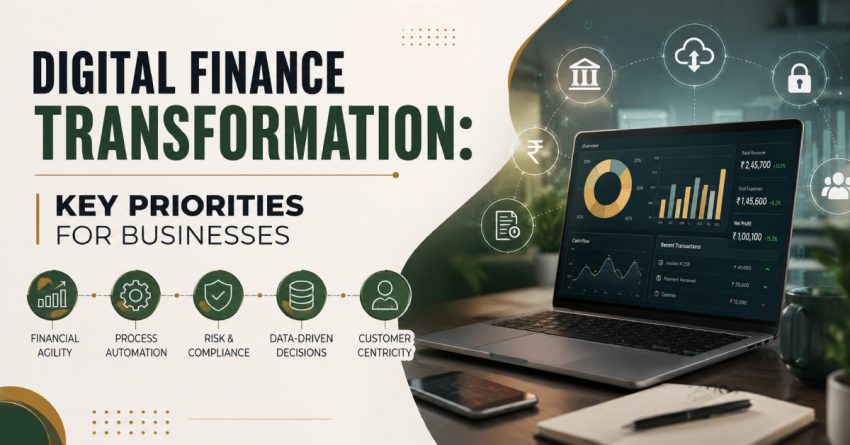
Digital transformation has transformed almost every aspect of business and finance is no exception. The finance teams of today’s organizations are expected to do much more than generate accurate financial reports, as they need to be able to provide real-time insights, assist in the decision-making process, bolster compliance, and enhance the operational efficiency of the organization. Achieving these goals requires more than simply implementing new software. It requires a carefully managed change which involves people, processes and technology.
This is where management consulting has a vital role. They help organizations develop a clear roadmap for a successful digital finance transformation. Moreover, they ensure that technology investments generate measurable business value instead of becoming an isolated IT project.
Core Financial Process Automation
The first step towards digital finance transformation is to automate repetitive financial tasks. Manual invoices, reconciliations, expense reporting and management take precious time and lead to possible errors.
Automation can work wonders on these processes, helping finance professionals to concentrate more on analysis, forecasting, and business planning, rather than on tedious administrative work. Management consulting professionals can help businesses find automation solutions that provide maximum operational impact.
Creating a single financial data ecosystem
There are still many companies with silo information systems to handle accounting, procurement, payroll, and budgeting. Such silos create challenges in producing accurate financial information and frequently delay decision making.
Digital finance transformation is about bringing these systems together in a single platform that allows financial data to flow between departments. When it comes to bringing these systems together and ensuring data consistency, management consultants are there to offer guidance on integrating systems in a way that removes redundant processes.
Strengthening Data-Driven Decision Making
The increasing use of real-time dashboards and sophisticated analytics is giving finance leaders the means to investigate business performance. Organizations should not have to wait until the end of the month to see the cash flow, profitability, operating expenses and financial risks.
Smart reporting solutions help companies to get actionable insights faster. A good management consulting firm will make sure that the reporting systems are consistent with the goals of the business, so that leadership can make decisions with confidence.
Improving Governance & Compliance
With the ongoing changes in regulatory requirements, strong financial governance has come to the forefront. Digital finance platforms increase transparency through the implementation of standardized workflows, maintaining extensive audit trails, and minimizing manual efforts.
These features enhance internal controls and help to ease financial regulatory requirements. Through a governance programme, business partners with proven expertise in management consultancy services build a governance framework that is effective beyond the initial growth phase.
Getting the Finance Team Ready for Change
Transformations cannot be achieved through technology alone. Staff need to be familiar with new processes, adept to digital tools, and prepare to learn new skills in a more technologically automated workplace.
To ensure user uptake, and for this, training, change management and ongoing support are crucial. Companies who spend on technology but do not invest in workforce readiness are not getting the long-term results that they need.
Conclusion
Digital finance transformation is no longer a future endeavor; it is a business need. The above factors will provide organizations with an opportunity to gain a competitive advantage by ensuring that there is increased efficiency and sustainability in growth.
Partnering with experienced management consultants can help companies implement these changes effectively while supporting a flexible and resilient finance function.
Frequently Asked Question
Q: What is digital finance transformation?
Digital finance transformation is the process of using digital technologies to modernize financial operations, automate processes, improve reporting, and support better business decision-making.
Q: Why is digital finance transformation important?
It helps businesses improve efficiency, reduce manual work, enhance financial visibility, strengthen compliance, and make faster, data-driven decisions.
Q: How does digital finance transformation work?
It combines technology, automation, cloud platforms, analytics, and optimized business processes to improve the way finance teams manage financial operations.
Q: What is a finance dashboard?
A finance dashboard is a visual reporting tool that displays key financial metrics such as revenue, expenses, cash flow, profitability, and business performance in real time.
Q: What is financial process automation?
Financial process automation uses software to automate routine accounting and finance tasks, improving efficiency and reducing manual errors.
Also Read: How Management Consulting Helps Businesses Identify Growth Opportunities