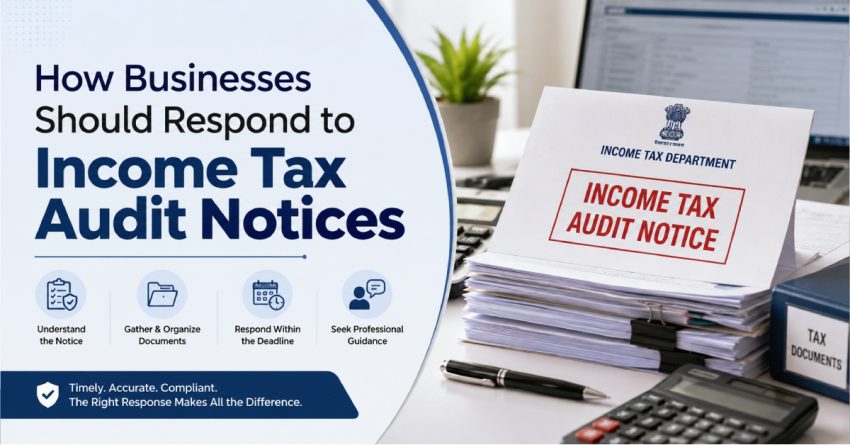
An income tax audit notice could trigger panic among business owners. It must also be understood that such an audit notice doesn’t claim or point out any wrongdoing or financial irregularity. Notices are often sent to confirm financial information, to check compliance, or to audit certain transactions. How the notice of an income tax audit is handled by a business is important to avoid any unnecessary problems or difficulties and communicate effectively with the tax authorities.
Companies that are well-prepared for an audit process will be those that respond in a calm manner, have proper paperwork and comply with the process and requirements of the audit.
Understanding the Purpose of the Notice
The first thing to do following getting a tax audit notice is to know the reason for the notice. The tax office can ask for clarification of income, deductions, expenses, tax returns, and financial transactions.
Companies should read the notice thoroughly to determine what some of the requirements are, such as the assessment year, documents that must be sent, deadlines for returning the forms, and what information is being requested. Failure to see the finer points or to understand the notice’s intent can cause further compliance problems as well as cause the process to be delayed.
Auditions are avoided the confusion, and businesses are ready to respond accurately if there is proper understanding.
Avoid Panic and Respond Professionally
Upon receiving the notice of income tax audit, many businesses panic. Impulsive or emotional choices can mean that your answers are incomplete or that you don’t communicate well with the tax authorities.
Businesses should be professional and systematic while dealing with income tax notices and not react impulsively. A response that is organized and well-articulated reflects the company’s sincerity, transparency, and willingness to cooperate.
Organize Financial Records Properly
A very crucial step is that of keeping your business’ financial records organized in the wake of receiving an income tax audit notice. This includes financial documentation such as receipts, bank statements, ledgers, tax applications, expenditure reports, etc. Additionally, keep all the supporting documents in handy.
An accurate bookkeeping enables the enterprises to back up transactions and offer understanding of the financial entries. Documentation that shows inconsistency or are missing can lead to further scrutiny and delay in the audit process.
Seek Professional Guidance
An income tax audit without the help of a tax professional can grow challenging especially for businesses that have complex monetary systems or a large number of trades.
Thus, such businesses must consult chartered accountants and tax consultants who can aid the businesses in getting a grasp on the notices and preparing the necessary documents in order to have effective communications with tax authorities.
Professional assistance also ensures that businesses do not make procedural errors in the process of the audit.
Maintain Transparency during the Audit
Delivering inaccurate and/or incomplete information will exacerbate the audit situation. Emphasis should be placed on being transparent and on giving businesses information, backed by the correct documentation.
If any real mistakes are identified during the review, then businesses should be open about these and discuss what they are going to do to improve. Clear communication helps establish trust and minimizes conflict.
Conclusion
An income tax audit notice is not an alarming event but instead is a significant compliance issue. Companies that are systematic, keep proper records and are able to communicate professionally are better prepared to go through an audit.
By preparing appropriately, responding promptly, and following the guidance of experienced tax professionals, businesses can navigate the income tax audit process with greater confidence and less risk involved. Sticking to sound financing practices and keeping the books well-documented – throughout the year – will help business become more compliant and prepared for future audits.
Frequently Asked Questions
Q: What is an income tax audit notice?
A: An income tax audit notice is official communication from tax authorities asking a business to provide financial information, clarify certain transactions, or confirm compliance with tax laws. It does not necessarily indicate wrongdoing — it is often a routine verification process.
Q: What is the role of a tax professional during an income tax audit?
A: Tax professionals such as chartered accountants and tax consultants help businesses understand the audit notice, organize required documents, prepare accurate responses, and communicate effectively with tax authorities — reducing the risk of procedural errors and unnecessary complications.
Q: How does proper financial management support smooth tax audits?
A: Good financial management ensures accurate bookkeeping, better documentation, and improved compliance. This helps businesses respond confidently during audits and reduces the chances of financial discrepancies.
Q: What can happen if businesses ignore an audit notice?
A: Ignoring an audit notice may result in penalties, additional investigations, legal issues, or compliance problems. Timely responses are important to avoid unnecessary financial and operational difficulties.
Q: Why is transparency important during an income tax audit?
A: Providing accurate and honest information helps businesses maintain trust with tax authorities. Transparency also reduces the risk of misunderstandings, penalties, and unnecessary legal complications.
Also Read: Understanding Common Income Tax Audit Triggers for Businesses