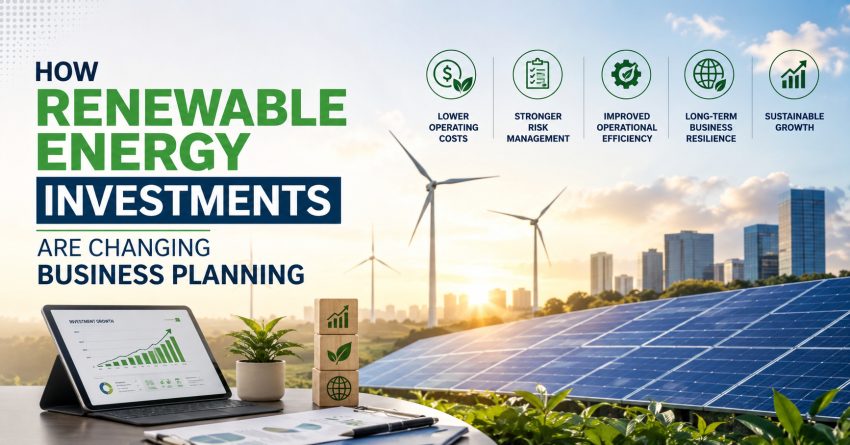
Renewable energy is not considered as an environmental initiative anymore but has evolved into a viable investment option. The increasing electricity consumption, fluctuating energy prices, stringent environmental policies, and expectations of investors have forced businesses to re-examine their approach towards energy in their corporate plans. Now, firms assess the potential of renewable energy not only on account of its environmental performance but also its viability in terms of business success.
This shift can be observed across industries. Both solar and wind energy are gaining significance for large enterprises which enter long-term PPAs for renewable energy and use batteries as part of their energy portfolio. For example, India continues to make progress in investments in clean energy as it aims at having 500 GW of non-fossil fuel electricity capacity by 2030.
Key Trends Reshaping Business Planning
Renewable Energy Is Becoming a Core Investment Strategy
The use of renewable energy as a long-term asset rather than an operating cost is becoming more common for companies. Companies are increasingly relying on captive solar power generation, wind power, and other energy mixes to achieve energy stability and reduce reliance on traditional energy.
Large investments and acquisitions in the renewable energy sector are a reflection that organizations are seeing renewable energy as an opportunity for growth, and not as a compliance requirement.
Energy Security Is Influencing Expansion Plans
The availability of reliable energy is the central yardstick that influences the decision while assessing new production facilities, data centres, and industries.
The use of renewable energy and battery storage is helping companies ensure energy stability while avoiding risks of fuel price changes.
| Traditional Business Planning | Renewable-Centric Planning |
| Energy is considered an operating cost | Perception about energy as a strategic Investment. |
| Dependence on conventional power | Diversified renewable energy portfolio |
| Short-term cost optimization | Long-term resilience and sustainability |
| Reactive energy procurement | Integrated energy planning |
| Limited ESG focus | Sustainability embedded into strategy |
Building More Resilient Enterprises
Sustainability Is Becoming a Competitive Advantage
Investors, customers, and financial institutions increasingly assess companies based on their environmental performance. Companies and interested investors that invest in renewable energy sources will develop their ESG profile and make it easier to access green financing, sustainability loans, and other forms of investment.
Renewable energy sources are not only an effort towards environmental protection but an integral part of business expansion and risk management strategy. The global investment in sustainable energy is setting new records every year.
Businesses that have invested in renewable energy are strengthening their ESG credibility besides improving their access to green finance, sustainability-related loans, and investments.
As opposed to being regarded solely as environmental initiatives alone, renewable energy projects are becoming an integral component of the business growth and risk mitigation plan of the company. The global investment in sustainable energy remains at all-time high levels, further cementing the long-term transition process.
Technology Is Maximizing Renewable Investments
The use of artificial intelligence, smart grids, predictive analysis, and digital energy management solutions makes possible the optimization of renewable energy generation and consumption. Companies can use these technologies to predict demand, manage energy storage and increase energy efficiency.
Digital technologies ensure that the renewable energy investments become profitable for firms.
Policy and Infrastructure Are Shaping Investment Decisions
Government policies, permitting processes, and grid infrastructure are increasingly influencing where and how businesses invest in renewable energy. Supportive policies are still in place to promote clean energy, and permitting delays and transmission constraints will be key planning factors in many areas. During project planning, businesses are therefore increasingly focusing on regulatory assessment.
Conclusion
The way that businesses make long-term decisions is being revolutionized by renewable energy investments. Energy decisions are no longer limited to utility management but are now impacting capital allocation, operational resilience, supply chain strategy and corporate competitiveness.
By integrating renewable energy into the business plan, companies will be better prepared to cope with the uncertainties and achieve their sustainability and growth objectives. Renewable energy will continue playing a pivotal role in the business plans of companies in addition to shaping the future of energy.
Frequently Asked Questions
Q: What is renewable energy investment?
Renewable energy investment refers to funding projects or technologies that generate power from renewable sources such as solar, wind, hydro, and biomass to support sustainable energy production.
Q: Why are businesses investing in renewable energy?
Businesses invest in renewable energy to reduce energy costs, improve energy security, meet sustainability goals, manage risks, and strengthen long-term business resilience.
Q: How does renewable energy improve energy security?
Renewable energy diversifies energy sources, reduces dependence on fuel price fluctuations, and provides a more reliable and stable energy supply.
Q: Which renewable energy sources are commonly used by businesses?
Businesses commonly invest in solar power, wind energy, hydroelectric power, biomass energy, and battery energy storage systems.
Q: What is green financing?
Green financing refers to loans, bonds, and investment products that fund environmentally sustainable projects such as renewable energy, energy efficiency, and clean infrastructure.