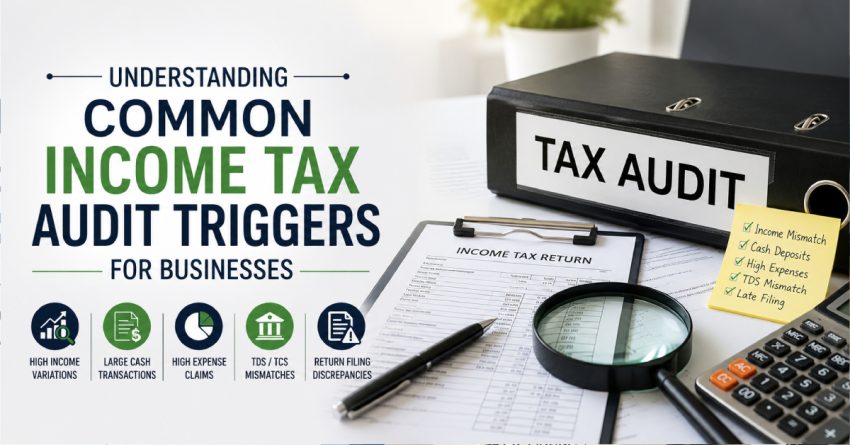
Facing an income tax audit can be stressful for any business. Although audits are a usual aspect of the taxation system, there is a lot of uncertainty among businesses about what actually prompts an audit. It is significant to understand these triggers since companies can be ready and avoid needless scrutiny. Businesses can keep their operations and financial records on track by adopting a proactive approach to income tax audit preparedness.
The Purpose of an Income Tax Audit
A financial audit is an income tax audit that is done to confirm the accuracy of the financial records of a business and whether they are adhering to the tax laws. Tax authorities aim to identify inconsistencies, underreporting of income, or inaccurate claims. Although not all businesses are audited, specific patterns and financial activities put more chances for an income tax audit.
Being aware of such patterns may make businesses enhance their compliance procedures and minimize the risk of being flagged.
Inconsistencies in Financial Reporting
Irregularity in financial information is one of the most frequent causes of an income tax audit. This is a cause of concern when there is a disparity between reported income, expenses, and tax filings. As an illustration, when the revenue as reported under financial statements is not identical to what is reported under tax returns, it may be easily noticed.
It is crucial to keep proper and consistent records. Even small mistakes, when repeated, can augment the risk of an income tax audit.
Unusual Expense Claims
High and unusual expense claims usually result in scrutiny. Businesses also make high deductions so that they can lower their taxable income, but when such deductions are found to be disproportionate to the nature or size of the business they can lead to an income tax audit.
All expense claims should be legitimate, properly documented and in line with the business operations. Effective documentation serves as a protection at time of scrutiny.
Volume of Cash Transactions is high
Another significant factor that may place businesses on the radar is the cash transactions. Big or frequent cash transactions are more difficult to monitor and confirm and therefore a matter of concern to tax agencies.
Audit of income tax may occur because of an increase in cash-based transactions and lack of justifiable reasons. Businesses are urged to be transparent through the use of traceable method of payments and maintaining records of all transactions.
Rapidly Changing Financial Trends
Income tax audit can also be initiated because of significant changes in income or expenses. An example of this is where profit margins suddenly decrease or a drastic change in the deductions show without a clear business explanation.
Although business conditions may vary, then there should be appropriate explanations and supporting documents for the variations. Obvious explanations can minimize the chances of unwarranted appraisal.
Related Party Transactions
Close attention is paid to transactions between related parties, directors or related companies. The transactions are also sometimes used to transfer profits or minimize the tax liability.
Unless addressed and reported, related party dealings may put an income tax audit at higher risk. In such cases, transparency and compliance regulations are imperative.
Late or Wrong Filings
Red flags can also be raised by late submission of tax returns or a high number of corrections in the documents submitted. These trends can be a sign of ineffective financial control or non-compliance.
One of the simplest but very important measures towards preventing an income tax audit is timely and proper filing. Regularity in adherence creates trust with the tax authorities.
Role of Internal Controls in Prevention of Triggers
Powerful internal controls may greatly mitigate the risk of being subjected to an income tax audit. Financial records are also accurate and reliable through regular internal reviews, proper approval systems and clear documentation practices.
Companies investing in systematic procedures are in a better position to manage compliance conditions, as well as to prevent unwarranted inquiries.
Conclusion
Income tax audit is not necessarily something to avoid but having knowledge about what causes it can be of great help. Starting with discrepancies in reporting to suspicious expense claims and cash dealings, there are various factors that can put business in the limelight.
Businesses can minimize their risk of audit risks by keeping accurate records, maintaining transparency and adhering to due compliance practices. Properly prepared attitude to the audit of income taxes not only avoids complexities but also enhances financial discipline in general.
Frequently Asked Questions
Q. What is an income tax audit and why does it happen?
A. An income tax audit is a financial review conducted by tax authorities to verify the accuracy of a business’s financial records and ensure compliance with tax laws. It is triggered when tax officials notice inconsistencies, underreported income, or suspicious financial patterns in a company’s filings.
Q. What are the most common triggers for an income tax audit?
A. Common triggers include inconsistencies in financial reporting, unusually high expense claims, large cash transactions, sudden changes in income or profit margins, related party transactions, and late or incorrect tax filings.
Q. How do cash transactions increase the risk of an income tax audit?
A. Large or frequent cash transactions are harder to verify, making them a concern for tax agencies. Businesses are advised to use traceable payment methods and maintain detailed records of all cash dealings to demonstrate transparency.
Q. How do related party transactions trigger income tax audits?
A. Transactions between directors, related companies, or associated parties are closely monitored as they can be used to transfer profits or artificially reduce tax liability. Transparent reporting and compliance with related party disclosure regulations are critical to avoid scrutiny.
Q. How can businesses reduce the risk of an income tax audit?
A. Businesses can minimize audit risk by maintaining accurate and consistent financial records, filing tax returns on time, documenting all expenses properly, using traceable payment methods, strengthening internal controls, and ensuring transparency in all related party transactions.
Also Read: New Income Tax Slabs 2026: Impact on Salaried Individuals