Introduction
In the modern, rapidly changing and competitive business landscape, it is crucial that companies are efficient, responsive and accurate. Cross-functional collaboration is a powerful tool to do just that. By fostering smooth communication and collaboration between departments, the Operations Management Process (OMP) is enhanced to be more efficient, effective, and goal oriented.
What is Cross-Functional Collaboration?
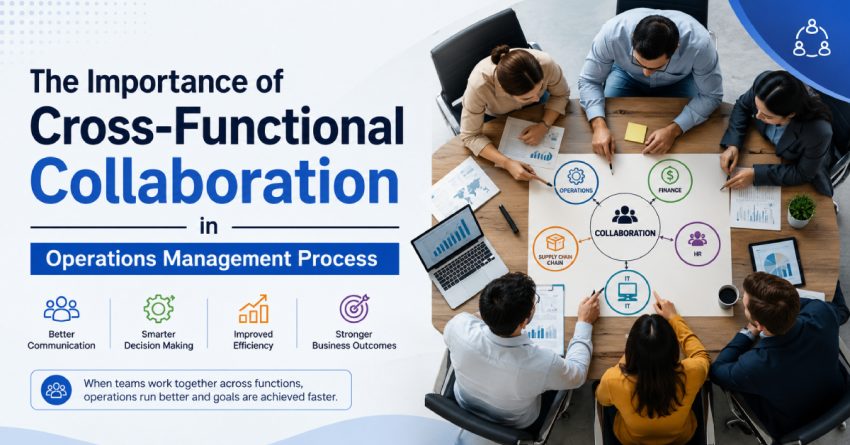
Cross-functional collaboration involves the integration of teams from various departments – such as finance, marketing, operations and human resources – to deliver a shared outcome. Teams work together to share information, resources and responsibilities to help inform and execute the desired outcome.
Enhancing Efficiency and Productivity
Open communication and collaboration are vital to an integrated Operations Management Process. Inter-departmental collaboration ensures lack of duplication, absence of information and seamless flow of processes. E.g. collaborating between the procurement and production departments helps avoid material shortages and improve efficiency.
Improving Decision-Making
Collaboration between departments offers a number of perspectives. Knowledge is shared between departments to make well-rounded decisions. This boosts the Operations Management Process, helping firms strategically adapt. It also helps to reduce risks and improve operations.
Driving Innovation and Problem-Solving
Cross-disciplinary thinking can lead to innovation. Collaboration and brainstorming give rise to creative thinking, which can lead to problem-solving. The diversity of views can enhance the Operations Management Process and lead to innovative and actionable plans.
Strengthening Accountability and Transparency
Collaboration increases transparency of all process steps. This transparency ensures work is well distributed and assigned team members take responsibility for work. Collaboration engenders trust and ensures the Operations Management Process is consistent across the firm.
Enhancing Customer Satisfaction
Ultimately, operations are all about satisfying customers. Collaboration allows functional departments to work together to understand the needs of the customer and how they can be satisfied throughout the value chain, from development to delivery. Collaborative teamwork supports a responsive Operations Management Process and delivers higher quality products and services to enhance customer satisfaction.
Best Practices for Effective Collaboration
Companies should spend money on communication systems, set goals, and be open about their work to get the most out of cross-functional teams. Managers are very important for getting people to work together and breaking down barriers. Meetings, KPIs, and tools for working together make it easier for coordination efforts.
Conclusion
Collaboration is no longer a luxury for businesses; it is a necessity. Working together across departments can lead to better results, more efficiency, and more new ideas. Ultimately, a culture of working together makes the Operations Management Process better, which leads to long-term success and sustainability.
Also Read: Why Internal Controls Are the Backbone of Corporate Finance Management