As expectations around environmental, social and governance (ESG) responsibilities continue to grow, businesses need to identify the sustainability issues most relevant to their operations. These issues may vary depending on the industry, business activities, supply chain and stakeholder expectations. Identifying material sustainability issues helps businesses prioritise their efforts, manage risks and develop an effective ESG strategy.
Understand How Your Business Operates
As a starting point you should look at how your business operates and think about which activities may have environmental or social impacts. If you are a manufacturer you may want to consider how much energy you are using, what emissions you are causing, water usage and waste creation. Service-based businesses may want to consider employee well-being, data security, diversity within the workplace and ethical practice.
This will help you identify what sustainability issues are relevant to your organisation.
Consider Key Stakeholders
Understanding what your stakeholders expect from your business will help you identify which sustainability issues are materia. These may include employees, customers, suppliers, investors, regulators and local communities.
You can do this by conducting surveys, interviews and stakeholder consultations, and collecting feedback. For example your employees may care more about creating a safe working environment while your investors may care more about climate-related financial risks.
This will help create a more relevant ESG Sustainability strategy.
Think About Environmental/Social Risks
Consider which risks your business faces. This could be resource scarcity, pollution, climate change and inefficient waste management. Social risks could include employee health and safety, employee wellbeing, human rights and community impact. Governance issues could include corruption, regulation, transparency and data security.
This will help you understand what issues could have an impact on your business.
Think About Financial and Business Impact
Not all sustainability issues will have the same impact on your finances. Some may increase your costs whilst others could affect your supply chain, market and investor confidence.
By considering the probability and impact of each issue it will help your management team understand which issues are most important to them. An effective ESG sustainability assessment should link environmental and social issues to risks within the business.
Create a Materiality Matrix
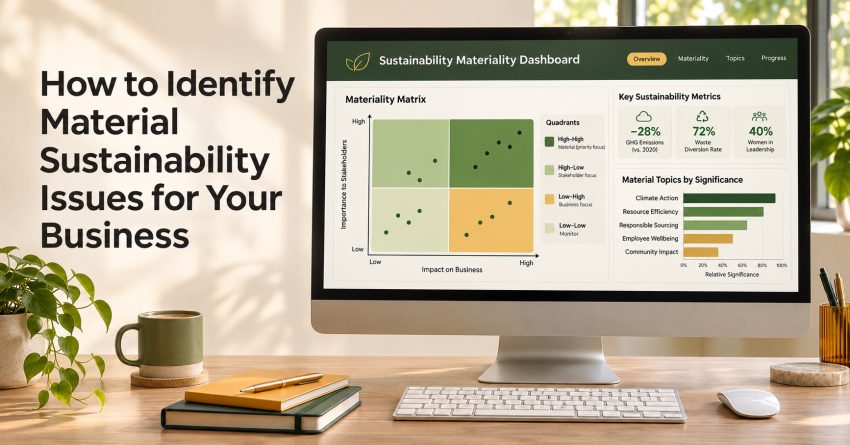
Creating a Materiality Matrix will help you organise and compare the sustainability issues you have identified. Usually these are split by how material they are to stakeholders and how important they are to the business.
For example, carbon emissions, employee safety, ethical sourcing and company governance could all be prioritised differently.
This will help your management team see what the main issues are and what areas should be prioritised. You should also write down why you have prioritised certain issues.
Regularly Review
As regulations, technology, market expectations and the way your business operates changes the material sustainability issues may change. Issues that aren’t currently a priority may become a major concern in the future.
Regularly reviewing your assessments will help keep your business up to date. Update stakeholder feedback and track how you are doing against your goals.
Conclusion
Identifying material sustainability issues helps businesses focus on the environmental, social and governance matters that are most relevant to their operations and stakeholders. A structured materiality assessment can support the development of an effective ESG strategy, improve accountability and help businesses manage emerging risks. Regular reviews also ensure that sustainability priorities remain aligned with changing business conditions and stakeholder expectations.
FAQs
Q: What are material sustainability issues for a business?
Material sustainability issues are significant environmental, social or governance matters affecting business prospects or impacts.
Q: How can a business identify material sustainability issues?
Review operations, supply chains, stakeholder feedback and sustainability risks to identify issues requiring closer assessment.
Q: Why is stakeholder engagement important in a materiality assessment?
Stakeholder engagement reveals concerns and impacts that internal teams may overlook, helping businesses assess relevant priorities.