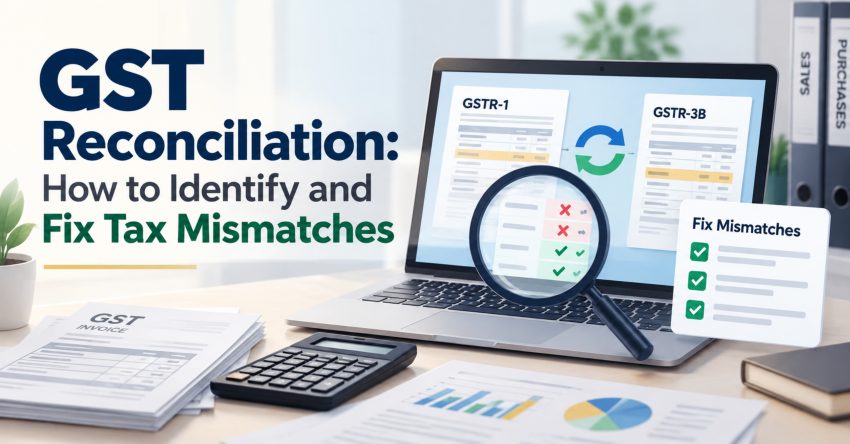
Just keeping up with your tax filing is not enough to ensure accurate GST compliance. The businesses should make sure that there is consistency in the figures regarding sales, purchases, input tax credit, tax payments, etc. to be reflected in their accounting books and GST returns. A well-managed reconciliation process could be used to detect mismatches in advance of compliance issues. A structured review of tax records and reconciliation controls can help businesses identify discrepancies and improve the reliability of indirect tax reporting.
Why GST Reconciliation Matters
The information regarding GST may be obtained from various sources such as accounting systems, purchase records, sales invoices, vendor information, and GST returns. Some factors that can cause differences in these records include timing, invoice information differences, missing records, and changes in transaction classification.
Doing so with regular reconciliation can alert businesses to these discrepancies and decide if corrective action is needed. It also provides a more systematic way in which to review tax information versus just at the end of the year.
An effective reconciliation process should cover the financial and tax records relevant to GST reporting. Key areas include:
- Sales recorded in books versus GST returns
- Purchase records versus reported input tax credit
- Tax invoices and credit or debit notes
- GST liability and tax payments
- Input tax credit reversals and adjustments
- Differences caused by amendments or timing
The reconciliation process should be proportionate to the nature and volume of the organisation’s transactions.
Identifying Input Tax Credit Differences
One area that needs careful consideration is input tax credit (ITC) as there is a possibility of mismatch between the purchase records and the available GST information which can impact on the amount of ITC claimed.
Businesses should investigate mismatches before making adjustments, as different causes may require different responses. Different responses are needed for the different vendor-related issues, missing invoice, wrong GSTIN, timing mismatches, and changes in transaction status.
A documented review process can be used to monitor differences identified and document the resolution of each difference.
Developing a structured reconciliation workflow
The more frequently GST is done as a control, the more effective the reconciliation will be. Businesses should define responsibilities for data extraction, reconciliation, investigation of exceptions, approval of adjustments and retention of supporting records.
Where volumes of transactions are large, automation may be helpful. But technology should be used to support, not supersede, suitable review processes for any unusual or significant discrepancies.
Maintaining Supporting Documentation
Reconciliation results ought to be accompanied by suitable documents. Any significant differences should be supported by evidence including the retention of the business’ invoices, credit notes, reconciliation statements, adjustment records, correspondence and other evidence.
An organised audit trail assists with responding to internal reviews, tax queries or compliance assessments Periodic reviews can help organisations assess whether their documentation and reconciliation controls are adequate.
Using Reconciliation to Identify Recurring Issues
A good reconciliation process might be far more than a way to fix differences. It can provide insights into any patterns of issues in invoicing, vendor management, accounting classifications, or tax processes.
Businesses can review the regular discrepancies and see if modifications are required in the systems, employee duties, approval process or vendor communication. This enables reconciliation records to be used to inform other efforts on the way to broader improvements on indirect tax controls.
Building a Sustainable GST Compliance Process
Organisations can support this process through documented review procedures, appropriate technology and periodic assessments. Regular evaluation of records and controls can help identify areas for improvement and support a consistent approach to GST compliance.
FAQs
Q: What is GST reconciliation?
GST reconciliation involves comparing accounting records with GST returns and other relevant GST information to identify mismatches in sales, purchases, tax payments and input tax credit.
Q: What are the common causes of GST reconciliation mismatches?
Common causes include missing invoices, incorrect GSTIN details, timing differences, amendments and transaction classification errors.
Q: How can businesses identify input tax credit (ITC) mismatches?
Businesses can compare purchase records with available GST information to identify missing invoices, vendor errors and ITC differences.