Stock shortages can affect business operations, increase costs and lead to inaccurate financial records. While occasional discrepancies may occur, recurring shortages can indicate errors in stock records, weak internal controls, theft or poor warehouse handling. A structured inventory audit can help businesses identify the reasons behind these shortages, investigate discrepancies and strengthen inventory controls.
Compare Stock Quantities
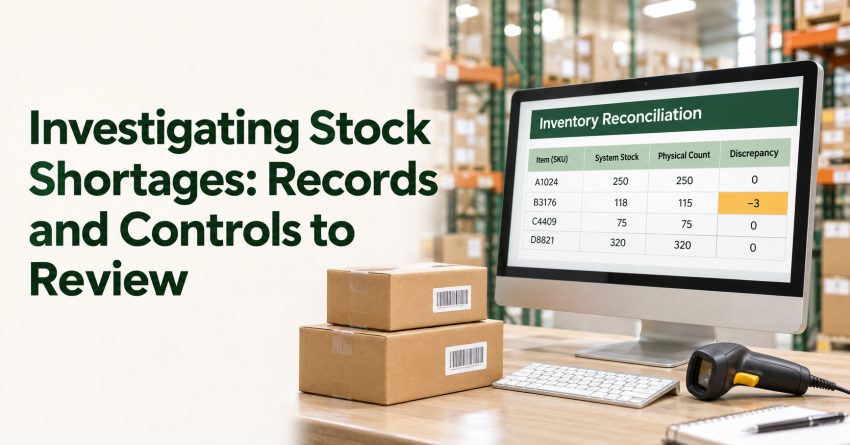
The first step is to check discrepancies between the physical stock and your inventory records. This can be done by doing a physical stock check and comparing to your register / warehouse records / ERP.
You should make sure you are checking high value items and items that are high volume and are often a problem. You should record any discrepancies you find. This will help you to have a clear starting point. Be sure to record how much discrepancy there is, what item it is, where it is and when it was checked.
Check Purchases and Goods Received
Sometimes discrepancies can be caused by incorrect entries at the time of receiving goods. Check your purchase orders, supplier invoices and goods received notes to ensure that the right quantities are being recorded.
During your inventory audit, check if any damage, rejection or under delivery has been recorded correctly. For example, if a business orders 500 units but receives only 470 acceptable units, the shortage of 30 units should be documented and investigated. Any rejected or damaged goods should also be recorded separately so that inventory records reflect the actual quantities accepted into stock.
Check Stock Issued
Shortages can occur if you do not have correct documentation when issuing stock to your production teams, transferring between warehouses or sending out to customers.
Check your material issue notes, delivery challans, dispatch records and internal transfers. All of these should have the correct documentation to authorise the movement of the materials. Pay particular attention to discrepancies between what has been recorded and what has actually been issued.
This will help you to see if any shortages were due to human error.
Check Adjustments and Returns
Sometimes frequent manual adjustments can mask any underlying issues with your stock. Look at your adjustment records to see who authorised the adjustment, why it was needed and if there was any documentation to back it up.
Ensure you have correct verification for sales returns; purchases return and returns from production. If you have received the returned items but have not updated your system, you may have inaccurate stock records. Damaged or outdated items should also be recorded separately so you know what is usable and what isn’t.
By looking into these records in more detail you can see if there are any issues with your processes causing errors.
Check Controls and Warehouse Processes
Sometimes you will need to look at your processes and controls to see why you are experiencing shortages.
Some key controls to look at are:
- Restricted Access: Allow only authorised staff to access storage areas or high-value inventory.
- Authorisation: Ensure all stock movements are properly authorised.
- Segregation of Duties: Separate receiving, recording, storing and authorising responsibilities wherever possible.
- Cycle Counts: Conduct regular physical stock counts.
- Monitoring: Review stock movements and investigate unusual discrepancies.
An inventory audit can help you to see if you are following these controls.
Look for Patterns
Whilst looking at individual discrepancies, it can be useful to look for patterns. Compare your stock shortages between different periods, warehouses, item types and staff members.
If you are regularly having shortages with a certain item it could be due to incorrect conversion of units, poor storage or frequent human error. If discrepancies are only occurring in one warehouse it could be due to poor oversight.
By analysing patterns you will be able to see if any issues are being caused by human error or regular issues within your processes.
Improve Controls
Once the reasons for stock shortages have been identified, businesses should take corrective action. This may include improving documentation, introducing barcode-based tracking, strengthening authorisation procedures or providing additional staff training.
A structured inventory audit can help businesses understand where stock discrepancies occur. Regularly reviewing inventory records, verifying physical stock and strengthening warehouse controls can reduce avoidable shortages and improve the accuracy of financial records.
FAQs
Q1. What causes stock shortages in a business?
Stock shortages can result from receiving errors, unrecorded movements, damage, theft or inaccurate inventory adjustments.
Q2. Which records should businesses review when investigating stock shortages?
Review purchase orders, goods received notes, issue slips, dispatch records, transfers, returns and stock adjustment logs.
Q3. How does an inventory audit help identify stock shortages?
An inventory audit compares physical quantities with recorded balances and investigates discrepancies using transaction records.
Q4. Which warehouse controls help reduce stock shortages?
Restricted access, authorised stock movements, separate staff responsibilities and regular cycle counts help reduce shortages.
Q5. Why should businesses analyse recurring stock discrepancies?
Recurring discrepancies can reveal weaknesses linked to specific items, warehouses, recording practices or stock handling processes.
This content is meant for information only and should not be considered as an advice or legal opinion, or otherwise. AKGVG & Associates does not intend to advertise its services through this.