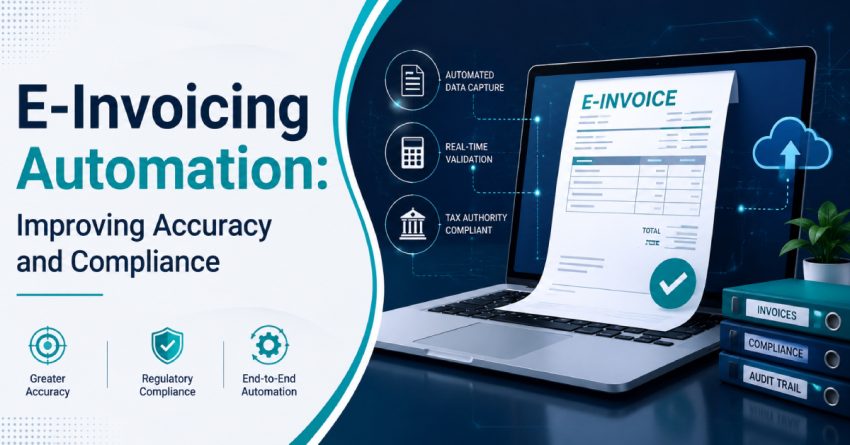
E-invoicing has revolutionized the entire invoicing process of businesses. In today’s fast-paced regulatory environment, firms are looking towards automating their e-invoicing processes to avoid any errors on part of employees and achieve tax compliance. The digitalization of the generation and validation of invoices can assist businesses in streamlining their financial processes to maintain correct records and increase efficiency.
Understanding E-Invoicing Automation
E-invoicing automation is the automation of the whole e-invoicing process, from the generation to the validation, transmission and storage of an e-invoice. They are developed to integrate with ERP and accounting systems to help eliminate any kind of manual data entry and improve the accuracy of financial transactions.
The automation of invoice workflows enables businesses to process invoices faster, keep a consistent documentation and improve their GST compliance outsourcing process for better tax reporting.
The advantages of E-Invoicing automation are:
Improved Accuracy
Invoicing manually may cause duplicated entries, wrong calculations and missing information. The system checks the details of the invoice before it gets processed to reduce error chances
Reduced Human Errors
Automation of data capture and validation reduces repetitive tasks performed manually and increases the accuracy of the invoice processing and financial transactions.
Faster Invoice Processing
The digitalization of the invoice workflow makes the entire process faster.
Enhanced Business Efficiency
Faster invoice approvals enhance cash flow, enhance supplier connections and minimize delays in financial operations.
Better Regulatory Compliance
Automated e-invoicing software has been developed to cope with the new GST requirements concerning electronic invoices. With GST compliance outsourcing implementation, businesses are now in a better position to guarantee the accuracy of the format, tax rates, and timely submission of their invoices as per the established regulations.
Improvement in Compliance with Automation
Real-Time Validation
The e-invoice solution ensures accuracy in invoice data prior to the transmission of the invoice since it reduces the risks of rejected or non-compliant invoices. In addition, real-time verification improves accuracy of tax reporting and helps avoid any issues related to taxes.
Simplified Audit Readiness
Digital invoices are hassle-free in the sense that they offer a clear audit trail and can easily be accessed during an internal or statutory audit.
Better Data Management
Centralized invoice repositories not only make invoices more accessible, but they also lessen reliance on paper. This allows finance departments to keep track of transactions effectively and can help with the outsourcing of GST compliance in a well-organized financial documentation.
Some obstacles encountered when implementing automation of e-invoicing
System Integration
It is common for businesses to have several accounting, procurement and ERP systems. Collaboration between these systems and e-invoicing solutions needs careful planning that can ensure smooth data flow and continuity in operations.
Employee Training and Management
To be successful, it will take training to get employees up and running with new digital tools. Clear workflows and ongoing assistance ensure that organizations get the most out of automation, with minimal disruptions to their processes.
Maintaining Data Security
The invoices carry some sensitive information related to monetary transactions and it is important for companies to pay attention to securing their information, regulating its access and implementing necessary cybersecurity measures. Moreover, organizations that use GST compliance outsourcing need to make sure that the service provider complies with strict security standards and other compliance requirements.
The Future of E-Invoicing Automation
The e-invoicing solutions are becoming even smarter thanks to artificial intelligence, machine learning and intelligent document processing technology. This technology can recognize anomalies and properly classify invoices in a manner that will improve the process of tax reporting with minimum or without any manual input.
Thanks to the continuous development of digital taxation regulations, companies that already automate their GST compliance through outsourcing will be well-prepared to improve compliance, reduce costs and optimize operations.
Conclusion
In the modern world of digital technologies, automation of the e-invoicing processes has become an important aspect of financial management. You can save your time, get accurate data and increase compliance with your business thanks to invoice processing automation. Integrating digital technologies into GST compliance outsourcing can help businesses improve efficiency, accuracy, and regulatory compliance.
Frequently Asked Questions
What is e-invoicing?
E-invoicing is the process of creating, exchanging, and storing invoices electronically in a standardized digital format instead of using paper invoices.
What is e-invoicing automation?
E-invoicing automation uses digital systems to generate, validate, send, and manage invoices with minimal manual intervention.
Is e-invoicing mandatory for all businesses?
The requirement depends on the country’s tax regulations and eligibility criteria. Businesses should check the latest applicable compliance requirements.
Is e-invoicing secure?
Yes. Most e-invoicing systems use encryption, access controls, and secure storage to protect sensitive financial information.
What are the best practices for managing e-invoices?
Businesses should maintain accurate records, validate invoice data, store invoices securely, and review their invoicing processes regularly.
Also Read: GST Updates for E-Commerce Seller in 2026