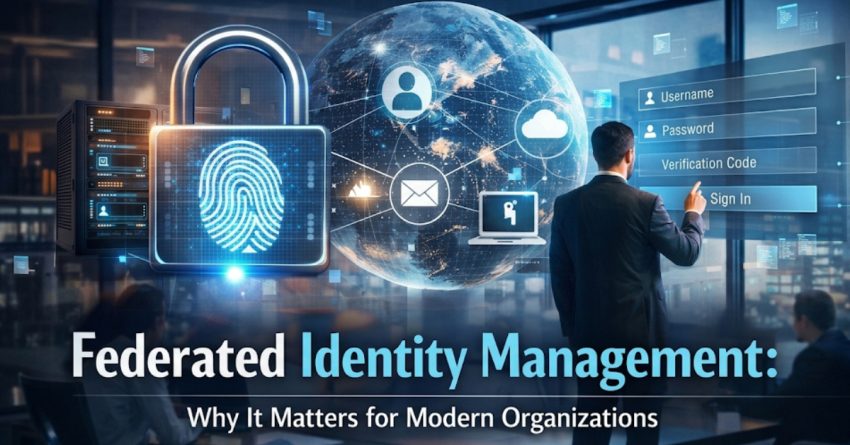
The issue of user identities in various systems is getting complicated as more organizations implement cloud computing, remote work models, and various digital platforms. Workers, partners, and consumers usually require using several applications and having individual logins to every system may pose a security threat and administrative burden. This is where federated identity management becomes important. It offers a safe and effective mechanism for managing identities within various systems and organizations.
What Is Federated Identity Management?
One such system is federated identity management (FIM), which enables users to enter only one set of log-in credentials to gain access to several applications or services. Rather than establishing individual accounts on each platform, users use the service of one trusted identity provider, which validates their identity to other systems involved.
In easy terms, federated identity management creates a trust relationship among the various entities or systems such that the user identities can be shared safely. This method does not require users to use a variety of usernames and passwords, making them have unhindered access to different services.
For example, several websites will enable the user to use their Google, Microsoft, or Facebook accounts to log in. Under these circumstances, the site uses these platforms as authoritative identity providers to verify the user.
What Federated Identity Management Works
Federated identity management typically involves three key components:
1. Identity Provider (IdP)
The authentication of the user is carried out by the identity provider. It checks the credentials of the user and authenticates his or her identity.
2. Service Provider (SP)
The application or the system accessed by the user is referred to as service provider. It uses identity provider to authenticate the user as opposed to controlling the process of authentication.
3. Trust Relationship
A secure trust relationship is established between the identity provider and the service provider, enabling them to exchange authentication information safely.
When a user is trying to get access into a service provider, they are redirected to the identity provider and are authenticated. The identity provider then responds with a secure authentication to the service provider and the user is allowed to access.
Key Benefits of Federated Identity Management
1. Improved User Experience
With federated identity management, users only need one set of credentials to access multiple applications. This reduces password fatigue and simplifies the login process.
2. Enhanced Security
Because federated identity management is centralized in authentication, organizations are able to provide more security controls like multi-factor authentication and minimize the chances of unauthorized access.
3. Reduced Administrative Burden
IT departments are no longer required to coordinate various user accounts in different systems. Federated identity management simplifies identity management and minimizes overheads.
4. Better Collaboration Between Organizations
Federated identity management provides the opportunity to share resources between partner organizations without creating separate user accounts in those systems.
5. Faster Access to Cloud Applications
Federated identity management is also an easy and secure method of allowing users to be able to go to different platforms without the need to be authenticated many times as businesses move towards depending on cloud-based services.
Why Federated Identity Management Is Important
In the current digital world, organizations must find a balance between access and high-level security. To balance this, federated identity management can be used to achieve seamless access to various systems without loss of tight control over authentication.
It is especially useful to those enterprises, which use more than one cloud environment, remote workers, and third-party collaborators. Through the introduction of the federated identity management, business organizations will be able to enhance their cybersecurity, boost their productivity, and ease the identity management activities.
This content is meant for information only and should not be considered as an advice or legal opinion, or otherwise. AKGVG & Associates does not intend to advertise its services through this.