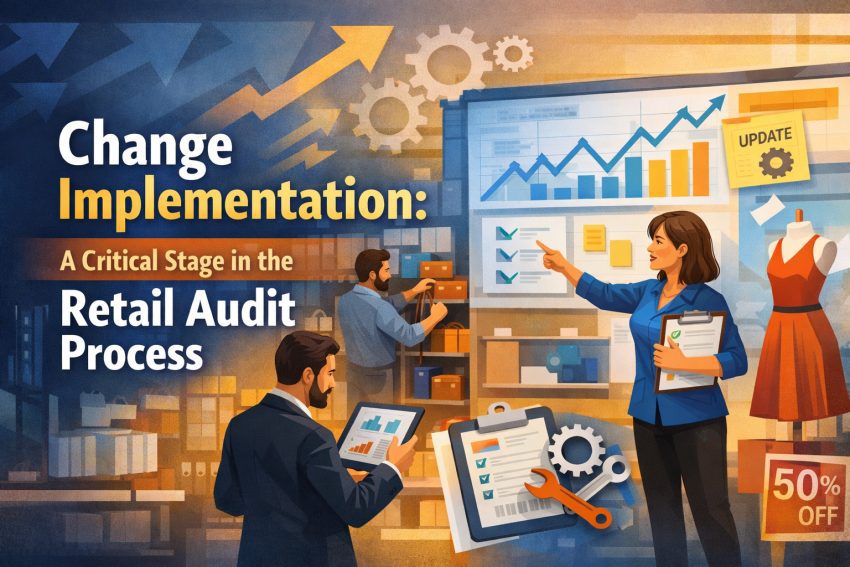
Retail audits are essential for evaluating store performance, ensuring compliance, and improving operational efficiency. Most retail audit frameworks follow a structured approach commonly described in five stages: planning, data collection, analysis, reporting, and change implementation. Among these, change implementation is often the most decisive stage, as it transforms audit findings into real, measurable improvements across retail operations.
Understanding Change Implementation in Retail Audit
Change implementation is the procedure of implementing the recommendations that have been determined in a retail audit. Following the occurrence of gaps, inefficiencies, or non-compliance matters, as highlighted in audit reports, corrective actions would be required to be implemented at the store, regional, or organizational level. The most detailed audit will be just an academic exercise with little practical value unless it is well implemented.
Why Change Implementation Matters
Constant improvement is the main goal of retail audit. Change implementation guarantees that the knowledge achieved because of audits, translates into improved store performance, elevated customer experience, and improved compliance. It links the disparity between action and observation. Customers that focus on this step have higher chances of recording better inventory accuracy, visual merchandising quality, employee productivity, and reduction of losses.
Key Activities Involved in Change Implementation
The implementation of change starts with the translation of the audit which results in objective and measurable actions. Depending on the nature of the issue, store managers, regional heads or functional teams are given responsibilities. Timelines are established, resources are assigned and performance standards are established. Communication is crucial at this phase, and the employees should be made aware of what needs to be changed, and why it is needed.
Managing Resistance to Change
Store staff or management resistance is one of the greatest obstacles to the implementation of change. Audit recommendations can be considered as a form of criticism to the employees. To deal with this, successful retailers engage teams in the change process, train them sufficiently, and demonstrate the benefits of better processes. Follow-up and the support of leadership help to strengthen accountability and promote adoption.
Role of Technology in Implementing Change
Digital dashboards and retail audit software can be of great use in terms of implementing the change. The tools enable real-time monitoring of corrective measures, store level performance scores and updates. Visual performance indicators and automatic alerts keep a constant track of changes and make them consistent across the sites. Technology can also be used to standardize best practices, particularly in the multi-store retail chains.
Measuring the Impact of Implemented Changes
Execution is not the end of change implementation. The outcomes of the corrective measures that one has to implement depend on measuring the results. Some of the indicators of key performance that retailers monitor include sales growth, shrinkage reduction, audit scores and customer satisfaction levels. A feedback loop would make sure that if the change fails to produce the expected results, more changes can be made.
Conclusion
The most action-based and effective of the five stages of retail audit is change implementation. It transforms the audit insight into operational excellence through motivation of accountability, enhancement of compliance and better overall performance of the store. Disciplined and well-managed change implementation by retailers yields long term benefits, which means that retail audits can be used to add value to business growth and sustainability.
This content is meant for information only and should not be considered as an advice or opinion, or otherwise. AKGVG & Associates does not intend to advertise its services through this.
Also Read: Retail store audit: A guide for brands