Organizations rely a lot on technology in their day-to-day activities, data storage, and communication in the current digital-driven era. Although this dependence is efficient, it leads businesses to dangers like cyberattacks, data loss, and system crashes. IT Audit can be critical in this respect as information systems are carefully inspected in an organization. It guarantees…
Author: AKGVG & Associates
Preventing Asset Misreporting with Physical Verification
Asset management of enterprises demands precision as well as responsibility. Financial records provided by firms usually help the firm to understand the position of its assets, but they are sometimes inaccurate without being verified with the right measures. The physical verification process comes into play at this point of action of checking out a variety…
Digital Transactions and Their Impact on Direct & Indirect Taxation
Over the past years, online transactions have become a common aspect of life. Online shopping and mobile wallets to instant money transfer are some of the new ways in which people and companies prefer digital payments. This has not only sped up financial transactions but has changed the way governments monitor and collect both direct…
Audits that Build Strong Corporate Governance
Corporate governance practically determines the way in which organizations can be governed and controlled. It guarantees business transparency, accountability and stakeholder-friendliness. Auditing is one of the most dependable mechanisms that can be used to enhance corporate governance. Auditing is also useful in ensuring that an organization develops a culture of trust and integrity; the same…
What Is a Tax Audit and Why It Matters for Businesses
A tax audit refers to specific intrusion into the financial records of a business and is conducted to determine fairness in recording the amount of income and claims of expenses as well as overall adherence to the provisions of the Income Tax Act. It makes sure that books of accounts give true and fair view…
How Symantec Endpoint Protection Differs from Other Security Tools
In the era of the digital world, companies and people depend on technology a lot to run affairs efficiently. This is both a boon and a bane as a surge in speed and efficiency is made possible at the risk of cyber threats like malware, ransomware, and phishing attacks. Companies overcome these risks by employing…
Risk Advisory Simplified: Finance & Operations
All business must contend with uncertainty. Whether it is financial or day-to-day operations related to risks, they are always present in operating any organization. The effective management of these risks gives a company the impetus to be stable and grow confidently. Here is where risk advisory comes into the picture. The question most business leaders…
ICFR Explained: Boosting Financial Transparency
Transparency of finances is among the most critical keys of trustworthiness of any organization. Firms are expected to submit their financial statements in a form that is fair, true and not deceptive. To realize this, businesses implement procedures and controls that ensure their financial records are accurate. This is where ICFR will play a part….
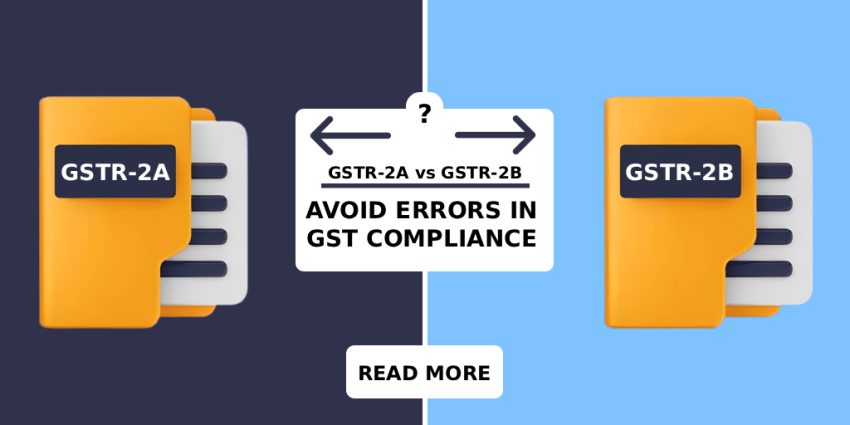
GSTR-2A vs GSTR-2B: Avoid Errors in GST Compliance
GST system in India has introduced considerable changes in the way business manages compliance and input tax credit (ITC). Out of the various forms/payments that are introduced under GST, GSTR-2A and GSTR-2B tend to confuse the taxpayers. Both are associated with ITC claims but are used to different ends. Learning the difference between GSTR 2A…
Assurance in Business: Importance in the Digital Age
Assurance in business is the procedure of scrutinising and validating the accuracy of information, systems and processes in an orderly way to ensure they are accurate, dependable and that they adhere to statutory requirements. It is one of the most important practices that inspire confidence within the stakeholders, investors, and regulators by confirming their reliability…