
One of the most crucial functions in an organization is procurement. It is concerned with purchasing goods and services, negotiating with traders, and making sure that all purchases are beneficial to the company. Due to the daily circulation of money in this process, even the slightest error may result in losses. Internal Financial Control is needed here. It assists companies to control the process of procurement in such a manner that it would eliminate mistakes, excessive payments, and risks that are not necessary.
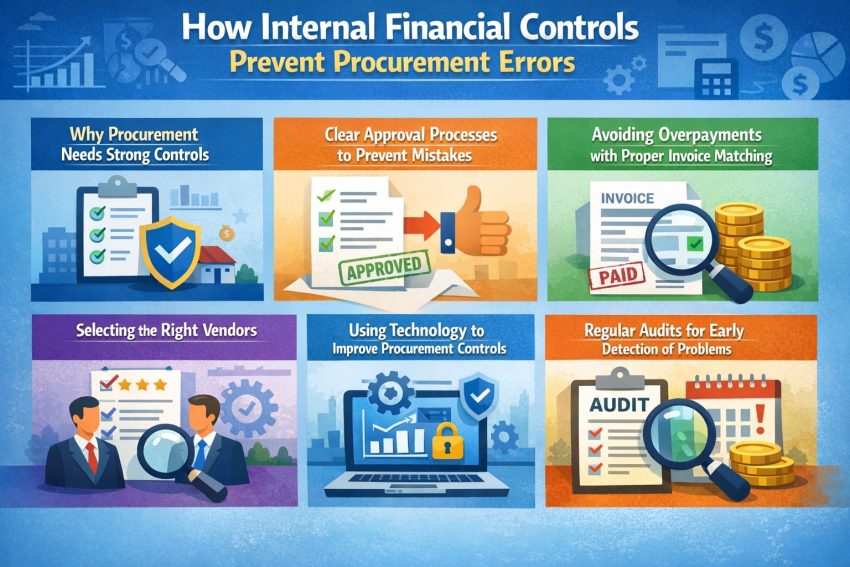
Why Procurement Needs Strong Controls
A strong Internal Financial Control system brings transparency and clear documentation. It also ensures that before any purchase is approved by any employee, the employee adheres to the company policies. When these controls are established properly, business will not need to spend additional money on items, and duplicate orders can be avoided as well as possibilities of fraud can be minimized.
Clear Approval Processes to Prevent Mistakes
Lack of due checks prior to a purchase is one of the largest challenges that companies experience during procurement. The employees can also order unnecessary things or purchase them at inflated prices without a proper approval process. A properly developed Internal Financial Control System can easily avert such problems by stipulating who shall be allowed to approve a purchase, the number of approvals required, and the type of documents that will be required. This will see that there is no order that is placed without any verification.
Avoiding Overpayments with Proper Invoice Matching
Overpayments usually occur due to failure to match invoices with purchase orders or delivery receipts. Occasionally, the vendor can update the price higher than the offered one or the company can pay the same bill twice. Under Internal Financial Control, the businesses can implement a simple, yet efficient method known as three-way matching. This implies that the invoice, purchase order and delivery note should be the same as the payment. This eliminates wrongful billing and makes sure that the company only pays what it gets.
Selecting the Right Vendors
The other problem that is usually related to is the choice of unreliable or expensive vendors. Lack of proper controls may result in companies still engaging with vendors who do not provide good quality and fair prices. To avoid this, Internal Financial Control assists in defining rules for selecting the vendors. Such guidelines could contain a review of the reputation of the vendor, price analysis with other suppliers and previous performance. This will make sure that the procurement decisions are made on value, rather than convenience.
Another area that can be used to ensure transparency in procurement is training. It is important to make employees realize why document checking, price checking, and approval procedures matter. When employees know about these duties, they assist with a more efficient purchase procedure and prevent the possibility of making mistakes. The control system can be made more effective by clear communication and frequent training.
Using Technology to Improve Procurement Controls
Procurement can also be enhanced using technology. Digital tools of purchase order, approvals, and invoice matching maximize the manual work and minimize the possibility of error. Teams can be notified about duplicates of invoices and price variation or missing documents by auto-alerts. With the help of technology, which backs the Internal Financial Control framework, the organizations can keep track of the procurement activities more effectively.
Regular Audits for Early Detection of Problems
Another relevant aspect of a robust control system is regular audits. Weaknesses in the procurement cycle can be detected through periodic reviews that assist companies to identify the weaknesses in the procurement cycle. These audits examine compliance with the process by employees, the presence of the documents and the existence of peculiar transactions. Early identification of problems helps to avoid financial losses and motivates progress.
This content is meant for information only and should not be considered as an advice or legal opinion, or otherwise. AKGVG & Associates does not intend to advertise its services through this.